Canada has more cooperative members per capita than any other country in the world. With over 9,000 cooperatives and 18 million members — in a country of 38 million people — nearly one in two Canadians belongs to at least one cooperative or credit union.
| Indicator | Figure |
|---|---|
| Registered cooperatives | 9,000+ |
| Total membership | 18M+ |
| Per-capita penetration | ~47% of population |
| Largest retail cooperative federation | Federated Co-operatives Limited (FCL) — C$10B+ revenue |
| Largest financial cooperative | Desjardins Group — C$450B+ assets |
| Primary federal law | Canada Cooperatives Act 1998 |
| Strongest provinces | Saskatchewan, Quebec, British Columbia |
| Cooperative sector GDP contribution | ~C$60 billion annually |
History of Cooperatives in Canada
Alphonse Desjardins and the First North American Credit Union (1900)
The cooperative financial movement in North America began in Canada. Alphonse Desjardins, a French-Canadian journalist and parliamentary reporter, founded the Caisse populaire de Lévis in Lévis, Quebec on 6 January 1901 — widely recognised as the first credit union in North America.
Desjardins had observed the crushing interest rates — sometimes 200–400% annually — charged by moneylenders to working-class Quebecers who could not access commercial banks. He studied the German Raiffeisen and Italian Luzzatti models of cooperative credit and adapted them for Quebec's Catholic, French-speaking communities.
By the time of his death in 1920, Desjardins had helped establish over 200 caisses populaires across Quebec and several in the United States. The movement he started grew into Desjardins Group, now Canada's largest cooperative financial institution, with C$450 billion in assets and 7 million members.
The Prairie Cooperative Movement and Wheat Pools
Western Canada's cooperative movement grew out of agricultural hardship. Prairie wheat farmers in the early 1900s faced exploitative grain elevator operators, railway freight rates weighted against them, and commodity prices set by distant Chicago markets.
The response was collective organisation. The Grain Growers' Grain Company, founded in 1906, was the first significant prairie farmer cooperative. It was followed by the provincial Wheat Pools — the Alberta Wheat Pool (1923), the Saskatchewan Wheat Pool (1924), and the Manitoba Pool Elevators (1925) — which collectively handled millions of tonnes of prairie grain and became among the most politically powerful institutions in western Canada.
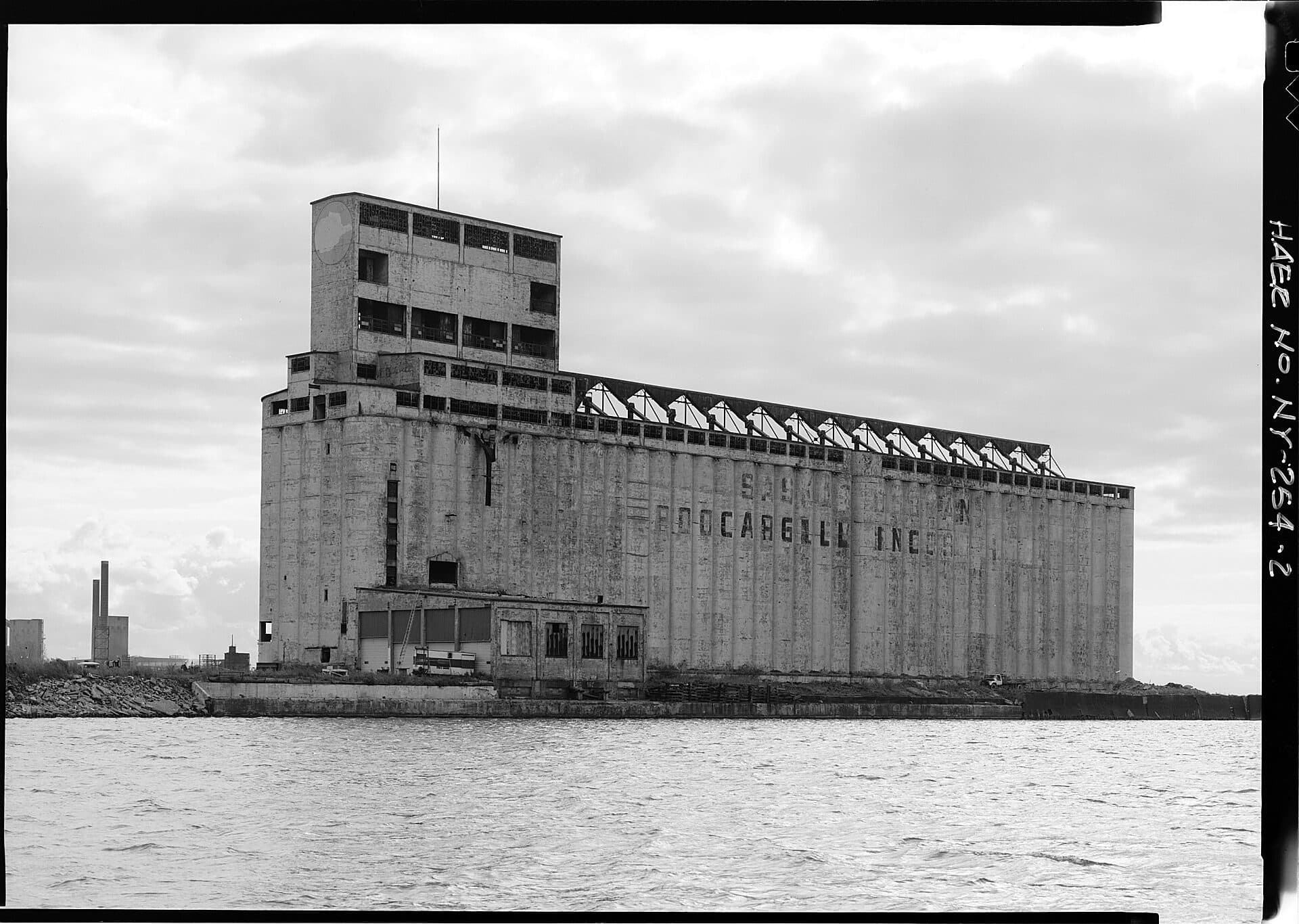
The Saskatchewan Wheat Pool, at its peak in the 1940s and 1950s, was the largest grain-handling cooperative in the world. It eventually merged with the Manitoba Pool to become Viterra (now owned by Glencore) after financial pressures and the removal of the Canadian Wheat Board's marketing monopoly in 2012 led to demutualization.
Not all prairie cooperatives followed this path. Federated Co-operatives Limited (FCL), the apex federation of retail cooperatives, has remained member-owned and grown steadily.
The Canada Cooperatives Act (1998)
Federal incorporation of cooperatives is governed by the Canada Cooperatives Act of 1998, administered by Corporations Canada. The Act established a single national framework for cooperatives that operate across provincial boundaries or prefer federal incorporation — including housing, financial, agricultural, and worker cooperatives.
Most Canadian cooperatives incorporate provincially under their province's cooperative corporations act, but federal incorporation is available and preferred by larger organisations operating nationally.
Federated Co-operatives Limited — The Prairie Retail Giant
Federated Co-operatives Limited (FCL), based in Saskatoon, Saskatchewan, is the central cooperative federation serving over 160 independent retail cooperative associations across western Canada. FCL does not sell directly to consumers — it wholesales goods, fuels, and services to its member retail coops, which in turn operate over 500 retail locations under the Co-op brand.
FCL's operations include:
- Petroleum — FCL owns and operates Canada's only cooperative-owned oil refinery. Learn more about consumer cooperatives and the retail cooperative model., the Cooperative Refinery Complex in Regina, Saskatchewan. The refinery processes approximately 100,000 barrels of crude oil per day, supplying fuel to Co-op gas stations across the prairies.
- Food — FCL wholesales groceries and runs distribution centres serving Co-op grocery stores
- Agro — farm supply (fertiliser, crop protection, seed) distributed to farmer-members through local retail coops
- Home — home and building products
| FCL Metric | Figure |
|---|---|
| Revenue | C$10B+ annually |
| Member retail coops | 160+ |
| Retail locations | 500+ |
| Employees (system-wide) | 24,000+ |
| Headquarters | Saskatoon, Saskatchewan |
| Refinery | Cooperative Refinery Complex, Regina |
FCL returned over C$700 million in equity to member cooperatives in recent years — a direct demonstration of the cooperative model's ability to generate and return value to members rather than external investors.
Local Retail Co-ops
The local retail cooperatives federated under FCL are independent businesses. Calgary Co-op, for example, is one of the largest retail food cooperatives in North America with over 500,000 members, C$1 billion+ in revenue, and operations spanning grocery, pharmacy, wine, and gas. Each local co-op sets its own equity return policy and is governed by an elected board of member-directors.
Desjardins Group — Quebec's Cooperative Financial System
Desjardins Group is the largest cooperative financial institution in Canada and one of the 50 largest financial institutions in North America. As of 2023:
- C$450 billion+ in total assets
- 7 million members (approximately 80% of Quebec's adult population)
- 226 caisses populaires across Quebec and Ontario
- Full-service banking, insurance, wealth management, and business finance
- Over 53,000 employees
Desjardins operates through a federated structure: local caisses populaires (credit unions) are owned by their members; these caisses are federated into the Fédération des caisses Desjardins du Québec, which in turn controls shared services, insurance subsidiaries (including Desjardins Insurance, one of Canada's largest P&C insurers), and investment management.
Desjardins is financially significant enough to be designated as a Domestic Systemically Important Financial Institution (D-SIFI) by the Office of the Superintendent of Financial Institutions (OSFI) — the same designation given to Canada's six major banks.
Credit Unions Beyond Quebec
Outside Quebec, credit unions operate under provincial credit union legislation rather than the Desjardins federated model. The national trade association is the Canadian Credit Union Association (CCUA), and the national central liquidity facility is Credit Union Central of Canada.
Major credit unions by province include:
| Credit Union | Province | Members (approx.) | Assets (approx.) |
|---|---|---|---|
| Vancity (Vancouver City Savings) | BC | 560,000 | C$34B+ |
| Meridian Credit Union | Ontario | 380,000 | C$32B+ |
| Servus Credit Union | Alberta | 390,000 | C$21B+ |
| First West Credit Union | BC | 250,000 | C$15B+ |
| Affinity Credit Union | Saskatchewan | 140,000 | C$9B+ |
Vancity (Vancouver City Savings Credit Union) is the largest community credit union in Canada by assets and a recognised leader in socially responsible finance. It has committed to carbon-neutral operations and directs a portion of surplus annually to community investment — over C$310 million in community grants and investments over its history.
Saskatchewan — Canada's Most Cooperative-Intensive Province
Saskatchewan has the highest cooperative density of any Canadian province, both by number of cooperatives and by the proportion of the economy they represent. Saskatchewan cooperatives have an estimated C$40 billion in annual economic activity.
The province's cooperative density reflects its agricultural history. Prairie grain farming, with its dispersed population and exposure to commodity price risk, created strong incentives for collective organisation. Federated Co-operatives is based in Saskatchewan. The Co-operators (Canada's largest cooperative-owned insurance company, headquartered in Guelph but deeply prairie-rooted) grew from Saskatchewan farmer cooperatives.
Saskatchewan also has a strong worker cooperative tradition, particularly in the construction, cleaning, and social services sectors.
Agriculture Beyond the Wheat Pools
UFA (United Farmers of Alberta)
United Farmers of Alberta (UFA) is an agricultural cooperative serving 120,000+ farmer-members in Alberta. UFA operates petroleum, crop inputs, livestock supplies, and field services. It is separate from Federated Co-operatives and serves Alberta farmers directly — it is one of Alberta's largest private companies by revenue.
The Co-operators — Insurance
The Co-operators Group Limited is Canada's largest cooperative-owned insurance company, with over C$22 billion in assets under administration. It provides property, auto, life, and commercial insurance across Canada through a network of agents. Its ownership structure includes a federation of Canadian cooperatives including credit unions, farm organisations, and worker cooperatives.
Arctic Co-operatives Limited
Arctic Co-operatives Limited (ACL) is a federation of 31 community cooperatives serving remote communities across the Northwest Territories and Nunavut. ACL cooperatives are often the only store in their community, selling groceries, hardware, fuel, and providing local services including hotels and cable TV. The cooperative model is the dominant commercial institution in many Arctic communities where population is too small and remote for private retail chains.
Housing and Worker Cooperatives
Canada has approximately 2,200 non-profit housing cooperatives providing housing to over 250,000 households. Housing cooperatives are particularly concentrated in Ontario and British Columbia.
Unlike rental housing, cooperative housing members pay monthly "housing charges" rather than rent, have no landlord-tenant relationship, and vote to elect the board that manages their building. Most Canadian housing cooperatives were developed between 1973 and 1991 under federal government housing programs.
Worker cooperatives in Canada are fewer in number — approximately 400 worker cooperatives — but are growing. They are concentrated in Quebec (where the cooperative culture is strongest), British Columbia, and Ontario, operating in sectors including food, construction, technology, and professional services.
Challenges
Conversion Pressure
Several high-profile Canadian cooperatives have converted to investor-owned firms. The most discussed was Mountain Equipment Company (MEC), a consumer cooperative that filed for creditor protection in 2020 and was sold to a private equity firm. MEC had 5 million members and was widely regarded as a Canadian cooperative success story. Its sale was seen by many members as a governance failure — the board prioritized debt resolution over member interests.
The Saskatchewan Wheat Pool's conversion to Viterra (now part of Glencore) followed a similar trajectory. Both cases illustrate the pressure cooperatives face when capital needs exceed what member equity can provide.
Member Engagement
As cooperatives grow larger, member engagement tends to decline. Major credit unions report that annual meeting attendance is often below 1% of membership. When members are disengaged, governance control can effectively shift to professional management — undermining the democratic ownership principle.
Competition and Scale
Independent retail cooperatives federated under FCL face intensifying competition from national grocery chains and online retailers. While FCL's refinery and supply chain provide cost advantages, smaller rural Co-op locations face viability pressures as prairie populations shift to urban centres.
Frequently Asked Questions
How many cooperatives are in Canada?
Canada has over 9,000 cooperatives with approximately 18 million members — nearly half the population. This gives Canada the highest per-capita cooperative membership of any country. The sector generates approximately C$60 billion in annual economic activity.
What is Federated Co-operatives Limited (FCL)?
FCL is the central wholesale cooperative federation that serves 160+ independent retail cooperative associations across western Canada. It operates Canada's only cooperative-owned oil refinery (the Cooperative Refinery Complex in Regina), a food wholesale division, and an agro supply division. FCL generates over C$10 billion in annual revenue and returns hundreds of millions in equity to member retail cooperatives each year.
What is Desjardins and how big is it?
Desjardins Group is Canada's largest cooperative financial institution, with C$450 billion in assets and 7 million members — roughly 80% of Quebec's adult population. It was founded in 1901 by Alphonse Desjardins and operates through a network of 226 local caisses populaires (credit unions) federated into a shared services system that includes insurance, wealth management, and business banking. It is designated as a systemically important financial institution by OSFI.
Who governs cooperatives in Canada?
Cooperative regulation is primarily provincial. Each province has its own cooperative corporations act. Federal incorporation is available under the Canada Cooperatives Act 1998 for cooperatives that want national scope. Credit unions are regulated provincially (outside Quebec) and federally supervised through OSFI if they are large enough. Desjardins caisses are regulated by the Autorité des marchés financiers (AMF) in Quebec.
What happened to MEC (Mountain Equipment Company)?
MEC was a consumer cooperative with 5 million members that sold outdoor gear. It filed for creditor protection in September 2020 amid debt problems and was sold to a US private equity firm, Kingswood Capital Management. The sale ended MEC's cooperative status. Members had limited ability to intervene because the board managed the creditor process without a member vote. MEC's conversion is now studied as a cautionary example of governance structures that allowed management to override member interests during a financial crisis.
Which province has the most cooperatives?
Saskatchewan has the highest cooperative density by proportion of the economy, with cooperatives representing an estimated C$40 billion in annual economic activity. Quebec has the most cooperatives by raw number and the most mature cooperative financial system (Desjardins). British Columbia has the largest credit unions by assets outside Quebec (Vancity, First West, Prospera).
What is Arctic Co-operatives Limited?
Arctic Co-operatives Limited (ACL) is a federation of 31 community cooperatives serving remote communities in the Northwest Territories and Nunavut. In many communities, the local Co-op is the only grocery store, hardware store, and fuel supplier. ACL cooperatives also provide hotel services and local broadcasting in some communities. The cooperative model is essential to commercial life in Canada's Arctic because private chains have no viable business case in communities of a few hundred people.
Related Articles
References & further reading
This guide is researched against primary sources. Where we cite figures, they reflect the most recent data published by these organisations at the time of writing.
- 1.Facts & figures on the cooperative movement — International Cooperative Alliance
- 2.Cooperatives and the world of work — International Labour Organization
Continue Reading
Find Cooperatives Worldwide
Browse 26,000+ cooperatives by sector and country in our free directory.