Cooperatives in Rwanda
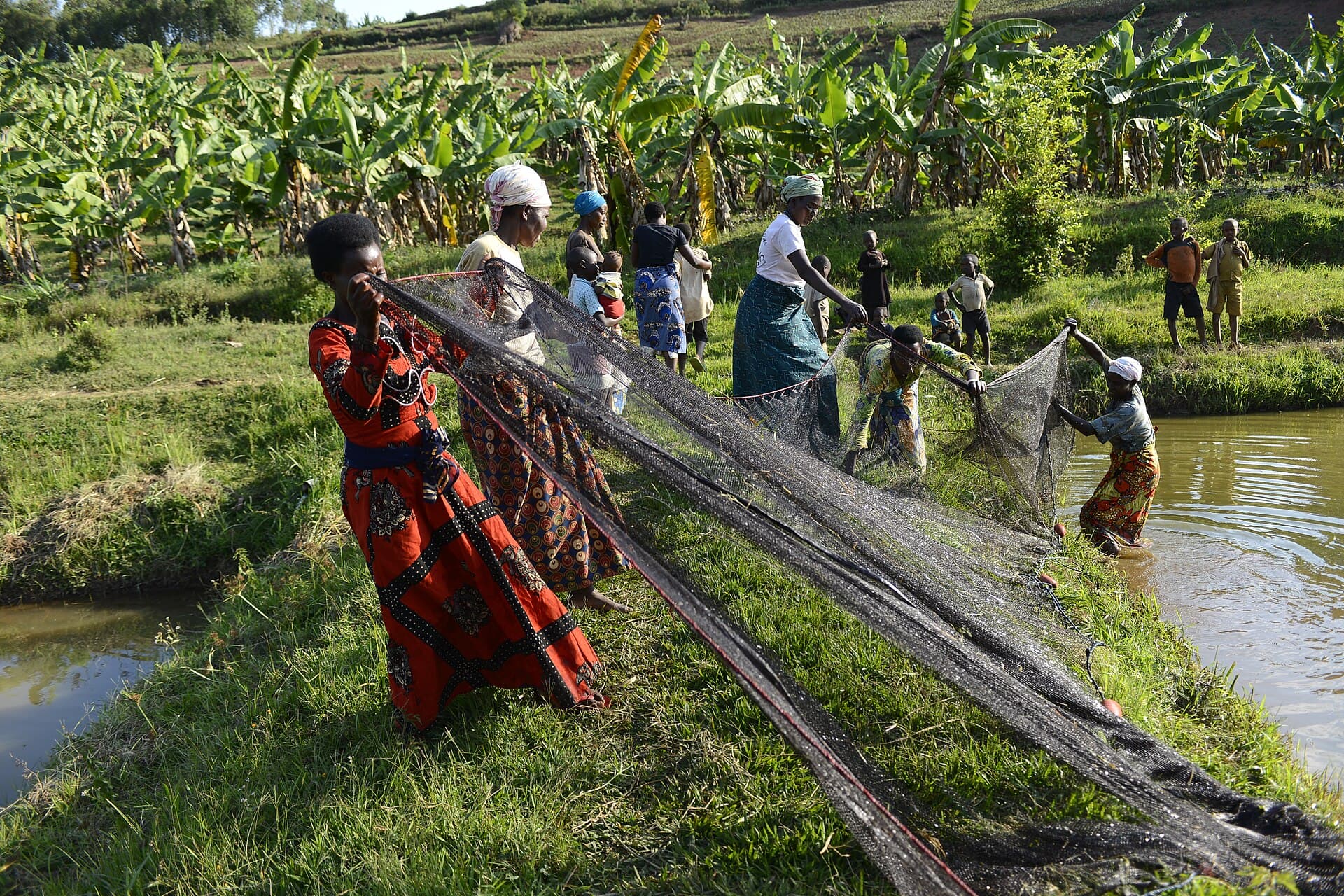
Real cooperatives in Rwanda, photographed on location. Full credits on our attributions page.
Overview of the Cooperative Sector in Rwanda
Rwanda has more than 8,000 cooperatives serving over 4.6 million members — approximately 35% of the adult population. The cooperative system is not organic market development but a deliberate state strategy: the government made cooperatives a central mechanism of post-genocide economic reconstruction, created the legal and institutional framework from scratch in the 2000s, and launched the Umurenge SACCO program in 2009 to place a cooperative savings institution within reach of every Rwandan.
The Umurenge SACCO program established one SACCO (Savings and Credit Cooperative Organization) in each of Rwanda's 416 administrative sectors. By 2023, these 416 SACCOs had collectively mobilized over RWF 300 billion (approximately $270 million) in member savings and disbursed cumulative loans exceeding RWF 250 billion. The program achieved a financial inclusion rate through cooperative institutions that would have taken decades through conventional market development.
Rwanda's agricultural cooperative sector — particularly in specialty coffee, tea, and pyrethrum — connects smallholder farmers to premium export markets. Rwanda's coffee cooperatives have won international Cup of Excellence competitions, with direct-trade buyers including Starbucks and European specialty importers sourcing from cooperative washing stations in the Lake Kivu region.
Types of Cooperatives in Rwanda
Umurenge SACCOs (Savings & Credit)
One per administrative sector — 416 total. Each is locally governed, accepts deposits and provides loans to sector residents. Collectively serve 4.6 million members, representing ~35% of Rwanda's adult population.
Coffee Cooperatives
300+ cooperatives organizing 200,000+ farmers around cooperative washing stations in the western and southern provinces. Specialty grade, direct-trade models with premium buyers worldwide.
Agricultural & Handicraft Cooperatives
Tea (150+ cooperatives, 100,000+ members), horticulture (400+ cooperatives), pyrethrum processing via Sopyrwa, and agaseke basket cooperatives (800+ cooperatives, 60,000+ weavers).
Notable Cooperatives in Rwanda
Umurenge SACCO Network
Savings & CreditLaunched 2009 under President Kagame's administration with one SACCO per administrative sector. By 2023, 416 SACCOs had mobilized over RWF 300 billion in savings and 4.6 million members — roughly 35% of Rwanda's adult population accessing formal financial services through cooperatives.
Horizon Sopyrwa
Pyrethrum / AgriculturalCooperative processing company in Ruhengeri organizing thousands of smallholder farmers in northern Rwanda for pyrethrum (natural insecticide) production. Rwanda is among the world's top pyrethrum exporters.
Rwandan Specialty Coffee Cooperatives
Coffee / AgriculturalMultiple cooperatives in the Huye, Nyamasheke, and Lake Kivu regions produce Cup of Excellence award-winning specialty coffee. Cooperative washing stations enable wet processing that commands premium prices from Starbucks, Counter Culture, and specialty importers.
Regulatory Framework
| Primary Legislation | Law No. 50/2007 Governing Cooperatives in Rwanda |
| Regulator | Rwanda Cooperative Agency (RCA) + National Bank of Rwanda (financial coops) |
| Key Year | 2007 |
| Notes | RCA was established under Law No. 50/2007 and began operations in 2008. Financial cooperatives (SACCOs) are jointly supervised by RCA and the National Bank of Rwanda (BNR), which sets prudential requirements. RCA policy sets a target of 30% female cooperative leadership. |
How to Form a Cooperative in Rwanda
- 1
Assemble minimum founding members and define cooperative purpose and service area
- 2
Draft cooperative bylaws (RCA provides model bylaws and technical assistance)
- 3
Submit registration application to the Rwanda Cooperative Agency (RCA) with completed forms, bylaws, list of founding members, and proof of minimum share capital
- 4
RCA reviews and issues Certificate of Registration
- 5
For financial cooperatives (SACCOs): obtain additional approval from the National Bank of Rwanda (BNR) for deposit-taking activities
- 6
Annual compliance: submit audited accounts within 6 months of fiscal year end; conduct annual general assembly
Related Cooperative Sectors
Frequently Asked Questions — Cooperatives in Rwanda
What is an Umurenge SACCO?
An Umurenge SACCO is a savings and credit cooperative operating at the level of an umurenge — Rwanda's smallest administrative unit (sector). The program, launched in 2009, established one SACCO in each of Rwanda's 416 sectors to provide formal financial services to every Rwandan regardless of location. By 2023, the 416 SACCOs served 4.6 million members and had mobilized over RWF 300 billion in savings.
Why is Rwandan coffee associated with cooperatives?
Rwanda's specialty coffee quality depends on wet processing — a method requiring washing stations with water infrastructure, fermentation tanks, and raised drying beds. Individual farmers with small plots cannot afford this infrastructure. Cooperative organization allows hundreds of farmers to collectively own a washing station, capturing the flavor quality and premium prices that washed processing commands. Rwandan cooperative coffee has won international competitions and attracted direct-trade buyers.
What is the Rwanda Cooperative Agency (RCA)?
The Rwanda Cooperative Agency is the government body responsible for registering, regulating, promoting, and developing cooperatives in Rwanda. Established under Law No. 50/2007, RCA registers cooperatives, conducts compliance audits, provides training, and coordinates with the National Bank of Rwanda for oversight of financial cooperatives. Its annual reports are the primary source of cooperative sector statistics in Rwanda.
Learn More
Cooperatives in Rwanda — In-Depth Guide
History, legislation, notable organisations, and sector breakdowns.
Find Cooperatives in Rwanda
Browse 26,000+ cooperatives by sector, country, and size in our free directory.