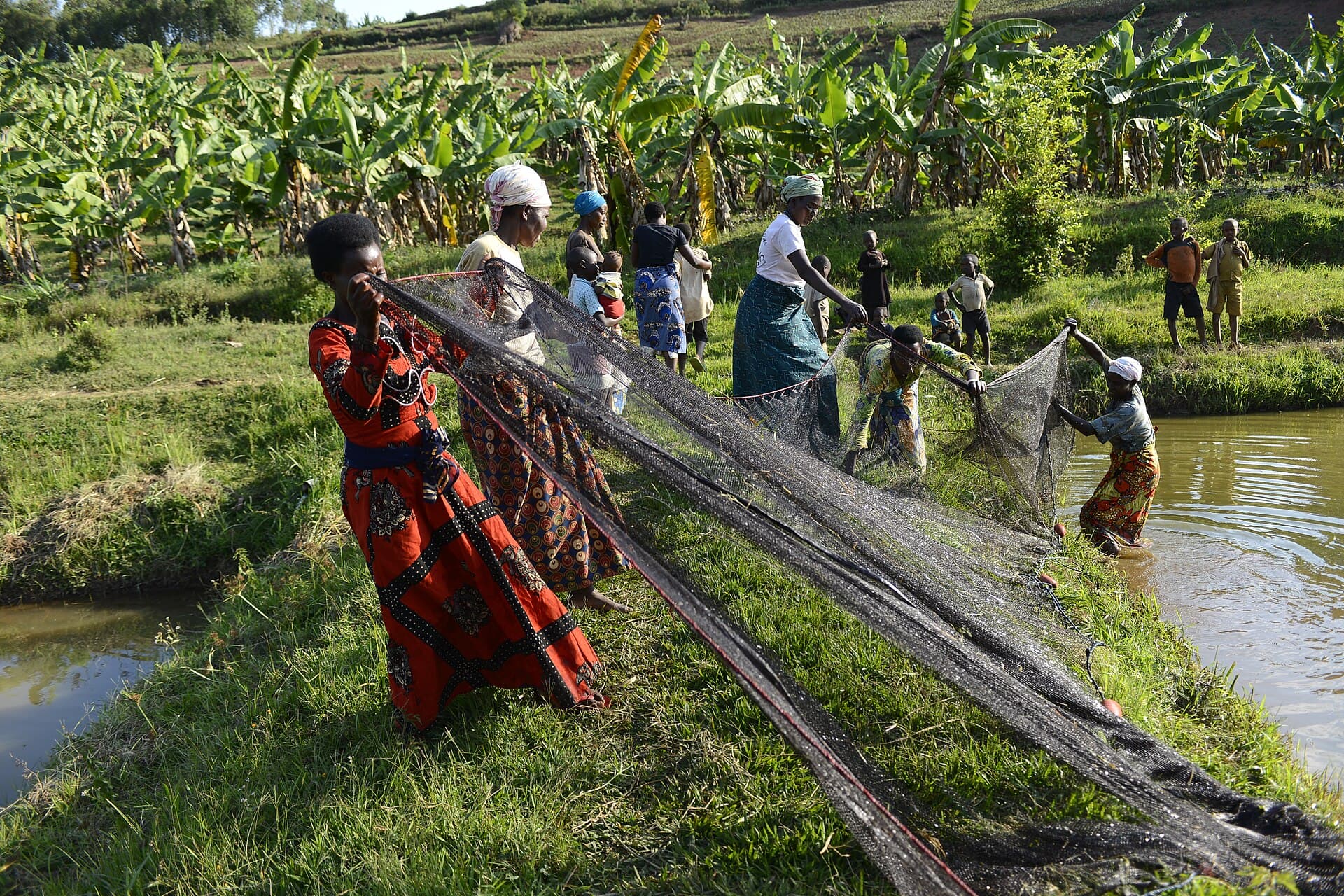
Rwanda has more than 8,000 cooperatives that collectively serve over 4.6 million members — and the cooperative system is not an organic market development but a deliberate state strategy. The government made cooperatives a central mechanism of post-genocide economic reconstruction, created the legal and institutional framework from scratch in the 2000s, and launched the Umurenge SACCO program in 2009 to put a cooperative savings institution within reach of every Rwandan regardless of location.
Rwanda's Cooperative Economy at a Glance
| Indicator | Figure |
|---|---|
| Total cooperatives | 8,000+ |
| Total members | 4.6 million+ (2023) |
| Umurenge SACCOs | 416 (one per administrative sector) |
| Umurenge SACCO members | 4.6M+ |
| Regulatory body | Rwanda Cooperative Agency (RCA) |
| Financial cooperative supervisor | MINECOFIN / National Bank of Rwanda |
| Governing law | Law No. 50/2007 Governing Cooperatives |
| Female leadership target | 30% of cooperative leadership positions |
| Key agricultural products | Coffee, tea, pyrethrum, horticulture |
History: Post-Genocide Reconstruction and the 1999 Policy
Rwanda's cooperative history cannot be understood outside the context of the 1994 genocide, which killed approximately 800,000 Tutsi and moderate Hutu in 100 days and left the country's economy, institutions, and social fabric in ruins. The Rwandan Patriotic Front (RPF) government that took power in July 1994 faced the task of rebuilding from near-zero: restoring production, reintegrating returning refugees, and creating economic structures that could serve the entire population across a small, landlocked, densely populated country with minimal natural resources and limited commercial infrastructure.
Cooperatives were selected as a core reconstruction tool. The reasoning was practical: cooperatives could organize dispersed smallholder farmers for collective production and marketing without requiring capital-intensive commercial intermediaries. They could provide financial services in rural areas where commercial banks had no presence and no interest in operating. They could create employment through collective enterprise without depending on foreign investment.
The 1999 national cooperative policy was the first formal government statement making cooperatives a strategic priority for economic development. It identified agriculture, savings and credit, and small-scale production as the three priority sectors for cooperative development, and committed government resources to establishing the legal and institutional framework.
Law No. 50/2007 Governing Cooperatives was the legislative implementation of this policy. It established clear legal requirements for cooperative formation (minimum membership, capital, governance structures), defined the rights and obligations of members, and created the Rwanda Cooperative Agency (RCA) as the regulatory and promotional body for the sector.
The Rwanda Cooperative Agency was formally established under the 2007 law and began operations in 2008. RCA registers all cooperatives, conducts supervisory visits, provides technical training to cooperative managers and board members, collects sector data, and coordinates cooperative development programs with line ministries. Financial cooperatives — SACCOs — fall under joint supervision by RCA and the National Bank of Rwanda (BNR), which sets prudential requirements for cooperative financial institutions.
Umurenge SACCOs: One Financial Institution Per Sector
The Umurenge SACCO program is Rwanda's most significant cooperative initiative and one of the most ambitious financial cooperative inclusion programs implemented by any government in Africa. Launched in 2009 by President Paul Kagame's administration, the program established one SACCO (Savings and Credit Cooperative Organization) in each of Rwanda's 416 administrative sectors (imirenge).
The objectives were explicit: reach every Rwandan with access to a savings account and affordable credit, regardless of how rural or remote their location. Before 2009, commercial banks operated in fewer than 30% of Rwanda's sectors. Most rural Rwandans had no formal savings mechanism and no access to credit except informal moneylenders.
How Umurenge SACCOs Work
Each Umurenge SACCO is a locally governed cooperative financial institution. Members in the sector are eligible to join by paying a membership fee (typically RWF 5,000–10,000 at founding) and opening a savings account. The SACCO collects deposits, builds a loan portfolio, and provides credit to members for agricultural inputs, school fees, small business working capital, and household investment.
The government provided initial capital grants to each SACCO at founding — typically RWF 2–5 million — to establish minimum operating capital. MINECOFIN and the National Bank of Rwanda set prudential requirements: capital adequacy ratios, liquidity minimums, and maximum loan-to-deposit ratios. RCA provides governance training and supervisory oversight.
By 2023, the 416 Umurenge SACCOs had collectively mobilized over RWF 300 billion (approximately $270 million) in member savings and disbursed cumulative loans exceeding RWF 250 billion. Total membership stood at 4.6 million, representing approximately 35% of Rwanda's adult population — a financial inclusion rate achieved through cooperative institutions in under 15 years.
Challenges in the Umurenge SACCO Network
The program's rapid state-led creation created implementation challenges. Some SACCOs were formed with insufficient member ownership — government direction rather than genuine member initiative drove formation, and member engagement in governance has been uneven. Non-performing loan ratios in some SACCOs have been elevated, reflecting weak credit assessment capacity and pressure to lend. The National Bank of Rwanda has periodically required consolidation or rehabilitation of underperforming SACCOs.
These challenges are acknowledged in RCA's annual reports and have been addressed through technical assistance programs, SACCO management training, and tightened BNR supervisory requirements. The program's architects argue that imperfect early implementation is an acceptable cost of the scale and speed of outreach achieved — a network built organically would have taken decades to reach the same membership.
Agricultural Cooperatives: Coffee, Tea, and Horticulture
Agriculture employs over 70% of Rwanda's workforce, and agricultural cooperatives are the primary vehicle for connecting smallholder farmers to export markets, processing facilities, and agricultural extension services.
Coffee: Rwanda's Specialty Success Story
Rwanda produces some of the world's most sought-after specialty coffee. The country's high-altitude growing conditions in the western provinces (particularly around Lake Kivu and the Nyungwe region) produce arabica beans with distinctive flavor profiles — clean, bright, with prominent fruity notes — that command premium prices in specialty markets.
The cooperative model is central to Rwanda's coffee quality story. Coffee washing stations — where freshly picked cherries are processed into wet-processed parchment — are typically organized as cooperatives or contracted with cooperatives. The washing station is expensive infrastructure that individual farmers cannot afford; cooperative organization allows dozens or hundreds of farmers to collectively build, own, and operate a station, capturing the quality premium that fully-washed coffee commands over sun-dried natural processing.
Well-known Rwandan specialty coffee cooperatives include organizations supplying Buf Café (operated by Bukoye Coffee Ltd, sourcing from farmers in the Huye district), Dormans (a regional roaster sourcing from Rwandan cooperatives), and numerous direct-trade buyers including Starbucks, Counter Culture, and European specialty importers. The Cup of Excellence program has awarded multiple Rwandan cooperatives with international recognition for cup quality, driving prices well above commodity market rates.
OCIR-Café (Office des Cultures Industrielles du Rwanda — Coffee) provides technical oversight for coffee quality standards, coordinating with RCA and the Ministry of Agriculture to ensure that cooperative washing stations meet processing and export quality requirements.
Tea Cooperatives
Rwanda is Africa's fourth-largest tea producer, and tea cooperatives — organized in the major growing areas of Nyamasheke, Rusizi, and Nyabihu — connect smallholder farmers to the large private and state-owned factories that process and export Rwanda's tea. The National Tea Authority (NTA) coordinates with cooperative farmer organizations to regulate input supply, monitor quality at farm level, and negotiate price parameters between factories and farmer cooperatives.
Pyrethrum and Horticulture
Rwanda exports pyrethrum (the natural insecticide chrysanthemum) primarily through the Horizon Sopyrwa cooperative processing company in Ruhengeri, which organizes thousands of smallholder farmers in northern Rwanda. Horticulture cooperatives — producing vegetables, cut flowers, and fruit for domestic markets and regional export — have expanded significantly under Rwanda's Vision 2050 agriculture modernization strategy, with government-supported irrigation infrastructure and cold chain investment favoring cooperative-organized producers who can meet export volume and quality requirements.
Women in Cooperative Leadership
Rwanda's post-genocide political reconstruction included an explicit commitment to gender equality that has made it a global standout: Rwanda's Parliament has the world's highest female representation (over 60% of seats). This commitment extends to cooperative governance.
RCA policy sets a target of 30% female cooperative leadership — requiring that at least 30% of board positions in registered cooperatives be held by women. In practice, many cooperatives — particularly in sectors dominated by women's production groups — exceed this target significantly. Women's savings cooperatives and agricultural cooperatives focused on crops traditionally managed by women (vegetables, small livestock, dairy) often have majority female boards.
The Alliance of Cooperative Federations and Networks (ACFN) — Rwanda's national cooperative apex body — runs dedicated programs for female cooperative leaders, including financial management training, governance skills development, and mentorship networks connecting women in leadership positions across cooperatives.
In coffee cooperatives specifically, gender integration has been an explicit quality improvement strategy: several Rwandan specialty exporters have found that involving women in cherry selection and processing quality control measurably improves cup scores, and cooperative governance structures that give women voting membership align incentives toward quality more effectively than male-dominated command structures.
Ejo Heza: Long-Term Savings Linked to Cooperatives
Ejo Heza (meaning "Bright Future" in Kinyarwanda) is Rwanda's government-sponsored voluntary long-term savings scheme for workers in the informal sector, launched in 2017. While not a cooperative program itself, Ejo Heza has been deliberately linked to the cooperative network as a distribution channel.
Umurenge SACCOs serve as collection points for Ejo Heza contributions. A worker can deposit as little as RWF 2,000 per month into their SACCO, designating it for the Ejo Heza scheme. The government matches contributions at a subsidized interest rate for low-income savers. SACCO members who participate in Ejo Heza build retirement savings through their cooperative institution, strengthening both financial inclusion for informal workers and the SACCO's deposit base simultaneously.
By 2023, Ejo Heza had enrolled over 2 million contributors, with a significant share accessing the scheme through their Umurenge SACCO membership.
Rwanda as a Cooperative Policy Model
Rwanda's cooperative sector is studied internationally not for its scale — at 8,000 cooperatives and 4.6 million members, it is smaller than Brazil, Italy, or France by most measures — but for the speed and intentionality of its construction. In 15 years, a post-conflict country with no functional cooperative infrastructure built a nationally comprehensive network of savings institutions, registered and regulated thousands of agricultural cooperatives, and used the cooperative form as a primary mechanism for financial inclusion and agricultural market development.
The government-directed character of this development is both its strength and its most debated feature. Cooperatives in classic cooperative theory are formed by members voluntarily to serve their collective needs. Many Rwandan cooperatives — particularly early Umurenge SACCOs — were formed as a result of government instruction, with membership partly coerced by local administrative pressure. The distinction between a genuine member-initiated cooperative and an administratively created organization using cooperative legal forms is not merely theoretical: it affects member engagement, governance quality, and ultimately financial performance.
RCA's own data shows higher-performing SACCOs tend to be those where members were more actively involved from formation — supporting the view that genuine ownership produces better outcomes. Rwanda's challenge going forward is deepening cooperative culture from compliance to genuine participation.
Rwanda's Cooperative Programs by Sector
| Sector | Cooperatives | Members | Key Products / Notes |
|---|---|---|---|
| Savings & credit (SACCOs) | 416 Umurenge + others | 4.6M+ | One per administrative sector |
| Coffee | 300+ | 200,000+ farmers | Specialty grade, Lake Kivu region |
| Tea | 150+ | 100,000+ | Northern and western provinces |
| Horticulture | 400+ | 80,000+ | Vegetables, flowers, fruit |
| Pyrethrum | Several | 15,000+ | Sopyrwa cooperative processor |
| Handicrafts | 800+ | 60,000+ | Agaseke basket cooperatives, tourism market |
Sources: Rwanda Cooperative Agency Annual Reports 2022–2023, National Bank of Rwanda
Frequently Asked Questions
What is the Rwanda Cooperative Agency (RCA)?
The Rwanda Cooperative Agency is the government body responsible for registering, regulating, promoting, and developing cooperatives in Rwanda. Established under Law No. 50/2007, RCA registers new cooperatives, conducts compliance audits, provides training to cooperative managers and board members, collects sector data, and coordinates cooperative development programs across government ministries. RCA works jointly with the National Bank of Rwanda for oversight of financial cooperatives (SACCOs). Its annual reports are the primary source for cooperative sector statistics in Rwanda and are publicly available on the RCA website.
What is an Umurenge SACCO?
An Umurenge SACCO is a savings and credit cooperative operating at the level of an umurenge — Rwanda's smallest administrative unit (sector). The Umurenge SACCO program, launched in 2009, established one SACCO in each of Rwanda's 416 sectors with the explicit goal of providing formal financial services to every Rwandan regardless of location. Each Umurenge SACCO is governed by its members (residents of the sector), accepts deposits, and provides loans for agricultural inputs, education, small business, and household needs. The National Bank of Rwanda sets prudential requirements; RCA provides governance oversight.
How has Rwanda's cooperative sector grown since the genocide?
In 1994, Rwanda had virtually no functioning cooperative infrastructure — the genocide destroyed institutions along with lives. The 1999 cooperative policy and 2007 law began rebuilding the sector from scratch. By 2009, when the Umurenge SACCO program launched, there were roughly 5,000 cooperatives with limited total membership. By 2023, cooperative membership had grown to 4.6 million — approximately 35% of Rwanda's adult population — through a combination of the Umurenge SACCO network, agricultural cooperative development programs, and strong government promotion. This is among the fastest rates of cooperative sector growth recorded in any country.
Why is Rwandan coffee associated with cooperatives?
Rwanda's specialty coffee quality depends on wet processing — the method of removing the cherry's fruit from the bean using water-based fermentation and washing. Wet processing requires a washing station with water infrastructure, raised drying beds, fermentation tanks, and skilled operators. An individual farmer with a fraction of a hectare cannot afford this infrastructure. Cooperative organization allows hundreds of farmers to collectively own and operate a washing station, capturing the flavor quality and market premium that washed processing provides. The cooperative station also aggregates volume — the minimum lot size for direct specialty trade. Rwanda's cooperative washing stations have won international coffee competitions and built direct relationships with premium roasters that would be impossible for individual farmers.
What role does the government play in Rwanda's cooperatives?
More than in most countries, the Rwandan government has directly shaped cooperative development — setting policy direction, providing initial capital to SACCOs, mandating local administrative involvement in cooperative formation, and using cooperatives as instruments of national economic strategy (Vision 2020, Vision 2050). This is sometimes described as "cooperative-as-policy-tool" rather than organic cooperative development. The government's argument is that in a post-conflict country with limited capital and institutional capacity, waiting for organic cooperative formation was not viable — speed of financial inclusion and agricultural modernization required active state direction. Critics note that government-imposed cooperatives sometimes lack genuine member ownership. Both are accurate observations about the same program.
What is the ACFN?
The Alliance of Cooperative Federations and Networks (ACFN) is Rwanda's national cooperative apex body, representing the cooperative sector before government, coordinating between sector federations, and running capacity-building programs for cooperative leaders. It is the Rwandan equivalent of OCB in Brazil or CEPES in Spain. ACFN runs specific programs for women in cooperative leadership and youth cooperative development, aligned with government gender equity and youth employment priorities.
What are agaseke cooperatives?
Agaseke (plural: uduseке) are traditional Rwandan woven baskets with distinctive geometric patterns in black, cream, and earth tones. The agaseke has become Rwanda's most recognized artisanal export. Women's handicraft cooperatives — organized across Kigali and in rural areas — produce agaseke and related woven products for the tourism market (Kigali's high-end hotels and airport shops) and international export to specialty retailers and gift markets. These cooperatives typically involve 20–100 weavers sharing production space, collective purchasing of materials, joint quality control, and shared marketing through ACFN's trade facilitation programs. Agaseke cooperatives are among Rwanda's best examples of cooperatives that arose organically from existing community craft traditions rather than government policy mandates.
How does the Ejo Heza scheme connect to cooperatives?
Ejo Heza ("Bright Future") is Rwanda's voluntary long-term savings scheme for informal sector workers, launched in 2017. It is administered by the Rwanda Social Security Board but uses Umurenge SACCOs as collection and distribution points. A member can contribute from RWF 2,000 per month through their SACCO, with government interest rate subsidies for low-income contributors. This integration benefits both systems: Ejo Heza reaches contributors through existing SACCO infrastructure without building a separate collection network, while SACCOs gain deposit volume and member engagement through the scheme. By 2023, over 2 million Ejo Heza contributors were accessing the scheme through SACCO channels.
Related Articles
- Types of Cooperatives — understanding SACCOs, agricultural cooperatives, and cooperative types
- Credit Unions and Cooperative Banking — how cooperative financial institutions operate
- Agricultural Cooperatives — cooperative farming models in Africa and globally
- How to Register a Cooperative — formation requirements across different countries
- Cooperative Laws by Country — legal frameworks in Africa and worldwide
- Cooperatives in Kenya
- Rwanda Country Hub
References & further reading
This guide is researched against primary sources. Where we cite figures, they reflect the most recent data published by these organisations at the time of writing.
- 1.Facts & figures on the cooperative movement — International Cooperative Alliance
- 2.Cooperatives and the world of work — International Labour Organization
Find Cooperatives Worldwide
Browse 26,000+ cooperatives by sector and country in our free directory.