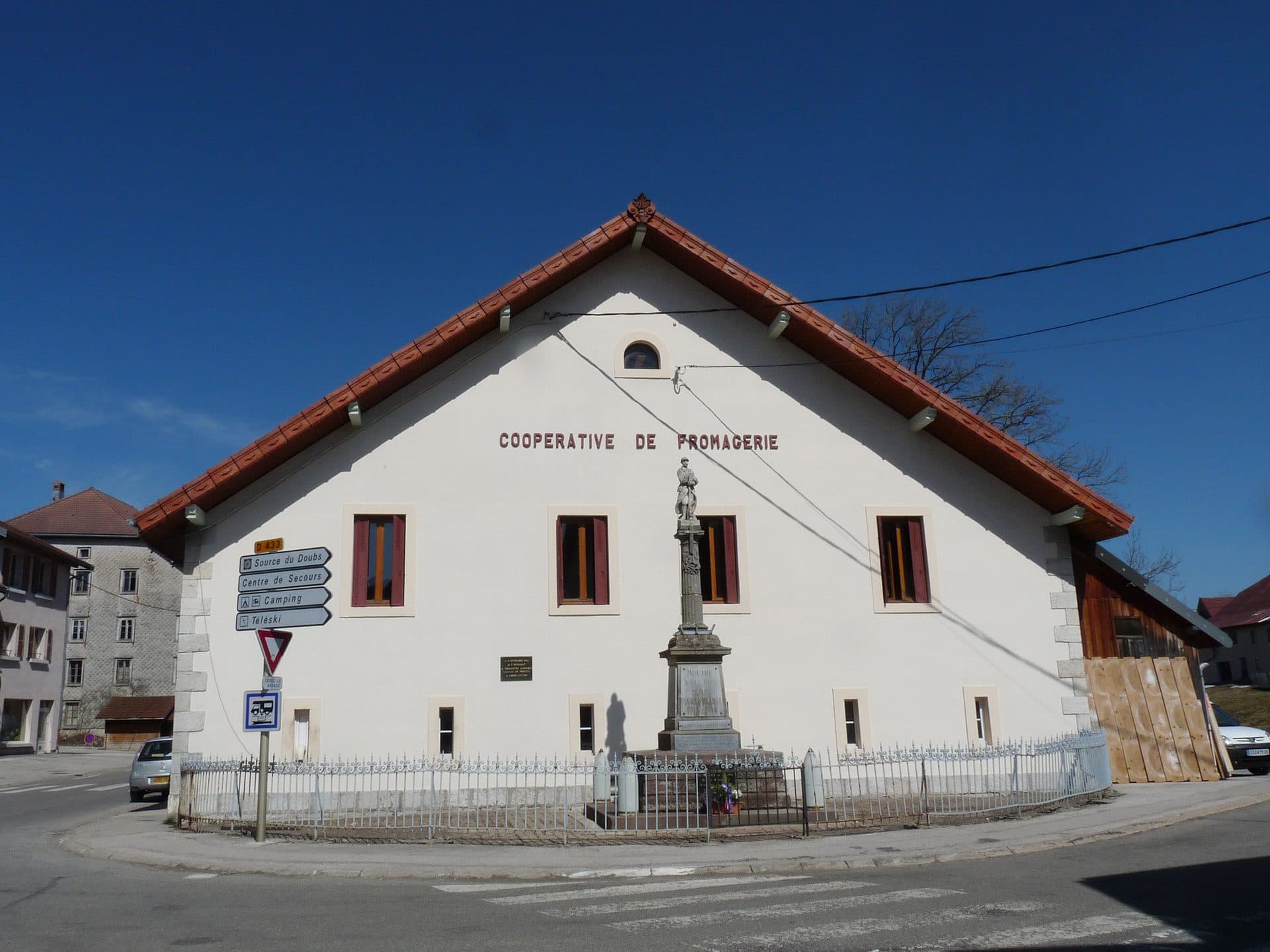
France has 23,000 cooperatives with more than 26 million members — roughly 40% of the French population — and the cooperative economy contributes approximately 10% of French GDP. The country is home to the largest cooperative bank in Europe, the largest retailer by turnover, and one of the world's four largest seed companies, all organized on cooperative principles.
France's Cooperative Economy at a Glance
| Indicator | Figure |
|---|---|
| Total cooperatives | 23,000+ |
| Total members | 26 million+ |
| Share of GDP | ~10% |
| Largest cooperative bank | Crédit Agricole — €2 trillion in assets |
| Largest retailer | E.Leclerc — €50B+ annual turnover |
| Worker cooperatives (SCOPs) | 14,000 enterprises, 57,000 workers |
| Largest seed cooperative | Limagrain — world's 4th largest seed company |
| Governing statute | Law of 10 September 1947 |
| Social economy federation | ESS France |
History: Fourier, Rochdale, and the 1947 Statute
The intellectual foundation for French cooperatives was laid before Rochdale. Charles Fourier (1772–1837) outlined cooperative community models called phalanstères — self-sufficient productive communities where work, consumption, and housing were organized collectively. Fourier never built one successfully, but his ideas circulated widely in French socialist and labor circles throughout the 19th century.
The Rochdale principles reached France in the 1860s and were taken up by consumer cooperative societies in Lyon, Paris, and the industrial north. By the end of the 19th century, consumer cooperatives serving working-class households were common in urban France, while agricultural cooperatives were beginning to organize in the grain-producing regions of the center and north.
Crédit Agricole was founded in 1894 by a French government initiative to provide affordable credit to farmers who were excluded from commercial banking. It is today the world's largest cooperative bank. It was structured from the start as a network of local cooperative banks owned by their farmer members — reflecting the Raiffeisen model then gaining influence across Europe. Local caisse locales (local branches) are owned by farmer-shareholders; these are grouped into regional cooperative banks; the regional banks collectively own Crédit Agricole S.A., the publicly listed holding company at the top of the group.
The defining regulatory moment for French cooperatives is the Law of 10 September 1947, which established the cooperative statute that still applies today. This law defines cooperatives as organizations that serve their members, establishes the priority of member service over profit maximization, sets rules for surplus allocation and reserves, and distinguishes cooperatives from commercial companies. Despite being nearly 80 years old, the 1947 statute has proved flexible enough to accommodate everything from small artisan cooperatives to the €2 trillion asset base of Crédit Agricole.
Regulatory Structure: ESS France, SCOPs, and SCICs
French cooperative law sits within the broader framework of the économie sociale et solidaire (ESS) — the social and solidarity economy. The ESS Law of July 31, 2014 (Loi Hamon) gave the ESS statutory recognition, defined its constituent sectors, and created new mechanisms for employee buyouts of firms facing closure.
ESS France is the national federation coordinating the social economy, representing cooperatives alongside mutual societies (mutuelles), associations, and social enterprises before the government and EU institutions.
SCOPs: Worker Cooperatives
The SCOP (Société coopérative et participative) is the French legal form for worker cooperatives. In a SCOP, workers hold the majority of capital and voting rights — at minimum, workers must hold 51% of the capital and 65% of voting rights. Non-member investors (employees who have not yet become full members, outside investors, or partner cooperatives) can hold minority stakes, but control always remains with worker-members.
SCOPs operate in every sector: engineering, publishing, architecture, IT, manufacturing, healthcare, and media. Le Monde diplomatique and several French regional newspapers operate as SCOPs. The national SCOP federation (CG SCOP) reported approximately 14,000 SCOP enterprises employing 57,000 workers as of 2023, with annual combined turnover exceeding €9 billion.
One particularly French feature of the SCOP framework is transmission — the conversion of conventional businesses into SCOPs when owners retire or face succession difficulties. French law provides tax incentives for owners who sell to their employees through a SCOP conversion, and the 2014 ESS Law strengthened employees' right to be informed and to bid for the company before it is sold to a third party.
SCICs: Multi-Stakeholder Cooperatives
The SCIC (Société coopérative d'intérêt collectif) is a French innovation created in 2001. Where a SCOP is governed primarily by workers, a SCIC can include multiple stakeholder categories as members simultaneously: workers, customers, local authorities, suppliers, volunteers, and any other group with a stake in the organization's mission.
SCICs are common in sectors where multiple stakeholders share an interest: local energy production, social housing, cultural facilities, local food systems, and care services. A SCIC might include the workers who operate a renewable energy facility, the local municipality that co-funded the project, and the households that subscribe to its output — all as co-owner members with differentiated governance rights. By 2023, France had over 1,000 SCICs.
Crédit Agricole: The World's Largest Cooperative Bank
Crédit Agricole Group is the largest cooperative bank in Europe and one of the largest banking groups in the world, with approximately €2 trillion in total assets. Its cooperative architecture is layered:
- 2,400 caisses locales — local cooperative branches, each governed by elected farmer-shareholders from the surrounding area
- 39 caisses régionales — regional cooperative banks, each owned by the local caisses in their territory, handling retail and business banking for their region
- Crédit Agricole S.A. — the publicly listed entity at the group's summit, majority-owned (61%) by the regional cooperative banks collectively
This structure means that the ultimate owners of Crédit Agricole are the 8.6 million cooperative shareholders — predominantly farmers and rural residents — who are members of local caisses. They elect local boards, who govern the regional banks, who collectively control the listed group that manages the international investment banking, insurance, and asset management operations (including Amundi, Europe's largest asset manager, which is majority-owned by Crédit Agricole S.A.).
Crédit Agricole is also France's largest agricultural lender, its largest home mortgage lender, and through its LCL (Le Crédit Lyonnais) subsidiary, a major urban retail bank. The cooperative structure at its foundation does not prevent it from being fully commercial in its operations — but it does mean that no external shareholder can take a controlling stake.
Crédit Mutuel: France's Second Cooperative Bank
Crédit Mutuel is the second major French cooperative bank, with 12 million members and a balance sheet of approximately €930 billion. Unlike Crédit Agricole, which has a single national group structure, Crédit Mutuel operates as a genuinely federated network of regional cooperatives with significant local autonomy. The Alsatian branches (Crédit Mutuel Alliance Fédérale) and the Breton branches have historically operated with near-independence on product strategy and IT.
Crédit Mutuel's member structure is more urban and general-purpose than Crédit Agricole's farmer roots — it serves households, small businesses, and professionals across France. It owns CIC (Crédit Industriel et Commercial), a major commercial bank, alongside insurance and telecoms subsidiaries.
E.Leclerc: France's Largest Retailer
E.Leclerc is France's largest food retailer by turnover, with revenues exceeding €50 billion annually and approximately 700 hypermarket and supermarket locations. It is not a cooperative in the traditional sense — it is a cooperative of independent merchants. Each E.Leclerc store is owned by a private entrepreneur who is a member of the cooperative association. There are no external shareholders and no franchisor extracting fees — members collectively own the central purchasing organization, the logistics infrastructure, and the brand.
E.Leclerc's founder, Édouard Leclerc, opened his first discount store in Landerneau, Brittany, in 1949 on an explicit anti-margin philosophy: sell at lower prices by cutting intermediaries. His cooperative model — independent local operators sharing a common buying power and brand — has proved durable. The business generates no public shareholder returns; surpluses are reinvested in the network or distributed to the independent merchant-members.
Limagrain: The Cooperative Seed Company
Limagrain is an agricultural seed cooperative based in Clermont-Ferrand, Auvergne, owned by approximately 1,900 farmer-members in the Limagne plain. It is the world's fourth-largest seed company by revenue (after Bayer/Monsanto, Corteva, and Syngenta), with annual revenue of approximately €1.8 billion and operations in over 55 countries.
Limagrain's portfolio includes field crops seeds (wheat, corn, sunflower), vegetable seeds through its HM.Clause subsidiary (a major global vegetable seed brand), and cereal processing through its Jacquet-Brossard bakery brands (McVitie's digestives and other products in France). The combination of seed research, international commercial scale, and food processing is unusual even for large agricultural cooperatives — and it is entirely owned by fewer than 2,000 French farmers.
Limagrain spends approximately 14% of seed revenue on R&D, funding plant breeding programs that would be unaffordable for individual farmer-owned cooperatives without Limagrain's scale.
SCOPs in Practice: Worker Cooperatives Across Sectors
France's worker cooperative sector extends well beyond manufacturing and agriculture. Some notable examples:
Media: Several French newspapers and magazines operate as SCOPs, including some regional dailies where workers converted the publication after commercial ownership failures. The cooperative press model provides editorial independence (no controlling shareholder can dictate coverage) and job security linked to collective economic performance.
Architecture and engineering: Cooperative professional service firms are common in France — architecture studios, engineering consultancies, and design agencies operate as SCOPs, particularly in major cities. The model suits professional services because the value is in the people, and worker-ownership aligns long-term incentives.
Retail: Biocoop — France's largest organic food cooperative network with over 700 stores — is organized as a cooperative of independent organic food stores, with members including stores, producers, employees, and consumers.
Chèque Déjeuner: Now merged into the Up Group, this employee benefit cooperative manages meal vouchers and social benefit schemes for millions of French employees and is itself a worker cooperative.
French Cooperative Law Advantages
The 1947 statute provides several practical advantages to cooperatives:
- Reserve indivisibility: A portion of annual surplus must be allocated to indivisible reserves — funds that cannot be distributed to members and remain in the cooperative permanently. This builds long-term capital resilience.
- Tax treatment: Cooperatives benefit from certain corporate tax exemptions on operations conducted exclusively with members. Agricultural cooperatives in particular have favorable VAT and tax treatment on member transactions.
- Transmission incentives: The 2014 ESS Law provides capital gains tax reductions for owners who sell to employees through a SCOP conversion.
- Public procurement preference: SCICs can include local authorities as members, facilitating public-cooperative partnerships in service delivery without the legal complications of direct public ownership.
French Cooperative Sectors by Scale
| Sector | Key Organizations | Scale |
|---|---|---|
| Banking (rural/agricultural) | Crédit Agricole | €2T assets, 8.6M shareholders |
| Banking (general) | Crédit Mutuel | €930B balance sheet, 12M members |
| Retail (hypermarkets) | E.Leclerc | €50B+ turnover, 700 stores |
| Seeds & agribusiness | Limagrain | €1.8B revenue, 1,900 farmer-members |
| Worker coops (SCOPs) | Various (CG SCOP federation) | 14,000 enterprises, 57,000 workers |
| Multi-stakeholder (SCICs) | Various | 1,000+ enterprises |
| Organic retail | Biocoop | 700+ stores |
| Agricultural (cereals/wine) | INVIVO Group, cave coopératives | Billions in turnover |
Frequently Asked Questions
What is the Law of 10 September 1947?
The Law of 10 September 1947 established France's general cooperative statute, which still governs most cooperatives today. It defines a cooperative as a society of persons freely joined together, operating democratically, with a principal aim of serving members' needs rather than generating returns for investors. It establishes principles including: one-member-one-vote, limited remuneration of capital, allocation of surplus in proportion to member activity, and the obligation to build indivisible collective reserves. Sector-specific laws (for agricultural cooperatives, credit cooperatives, and worker cooperatives) supplement this statute with additional rules for their specific contexts.
Is Crédit Agricole really a cooperative?
Yes, though with qualifications. The Crédit Agricole Group is ultimately owned by 8.6 million cooperative shareholders through local and regional caisse structures. However, Crédit Agricole S.A. — the entity listed on the Paris stock exchange — has minority shareholders who are not cooperative members. This dual structure means that the group is cooperative at its ownership foundation but operates commercial and investment banking activities through a publicly listed subsidiary. The cooperative shareholders collectively hold 61% of Crédit Agricole S.A. and therefore control the group, but external investors hold the remaining 39%.
What is the difference between a SCOP and a SCIC?
A SCOP (Société coopérative et participative) is a worker cooperative where employees must hold the majority of capital and voting rights. It is the right structure when the primary purpose is providing employment and ownership to workers. A SCIC (Société coopérative d'intérêt collectif) is a multi-stakeholder cooperative that can include workers, customers, local authorities, suppliers, and any other groups as co-owner members simultaneously. SCICs are better suited to delivering public goods or services where multiple groups have a legitimate stake — a local energy project, a community food hub, or a cultural center, for example. Both forms operate under French commercial law with cooperative governance rules.
How does E.Leclerc operate as a cooperative if stores are independently owned?
E.Leclerc is structured as a cooperative of independent merchants — each store owner is a member who contributes capital and pays into collective functions (purchasing, IT, logistics, brand), but owns and operates their store independently. The cooperative association pools buying power, negotiates with suppliers, runs the brand, and sets common pricing philosophy. There is no franchisor taking a percentage of turnover and no external shareholder taking a profit. Surpluses from the collective functions are reinvested or distributed to member-merchants. The founder Édouard Leclerc's original philosophy — maximum buying power, minimum margin — is structurally enforced by the cooperative model.
What share of France's GDP comes from cooperatives?
Cooperatives and the broader social economy (including mutual societies and associations) together account for approximately 10% of French GDP, employing around 2.4 million people. Cooperatives alone — banking, retail, agricultural, and worker cooperatives combined — contribute a substantial share of this figure. The three largest cooperative organizations by economic scale (Crédit Agricole, Crédit Mutuel, and E.Leclerc) alone generate tens of billions in value added annually.
What is Limagrain and why is it unusual?
Limagrain is a French agricultural cooperative owned by approximately 1,900 farmers in the Limagne region that has grown into the world's fourth-largest seed company by revenue. It is unusual because most farmer cooperatives focus on first-stage processing and marketing of bulk commodities. Limagrain moved upstream into plant genetics and seed development, then built global commercial operations. Its HM.Clause subsidiary is one of the world's leading vegetable seed brands. It also owns bakery food brands through Jacquet-Brossard. This integration from plant breeding through food manufacturing, all owned by under 2,000 French farmers, has no real peer in the cooperative world.
Can a French company convert to a SCOP?
Yes. Any commercial company — SA, SARL, or other form — can convert into a SCOP if employees collectively hold at least 51% of capital and 65% of voting rights after conversion. The 2014 ESS Law strengthened the process by giving employees the right to be informed of any planned sale of the business and to make a collective buyout offer before an external sale completes. Tax incentives for selling owners — including capital gains tax reductions — make SCOP conversion financially attractive compared to a trade sale. The CG SCOP federation reports that several hundred SCOP conversions occur every year, predominantly in SMEs facing ownership succession.
How do French agricultural cooperatives handle wine?
The cave coopérative (cooperative winery) is a major institution in French wine, particularly in the Languedoc, Roussillon, Champagne, Burgundy, and Alsace regions. Cave coopératives were established from the early 20th century to allow small farmers with a few hectares of vines to pool their grapes for collective vinification, aging, and marketing. They control a large share of volume in Languedoc and Roussillon. In Champagne, several large cooperative groups — including Nicolas Feuillatte (the world's third-largest Champagne brand by volume, owned by the Centre Vinicole de la Champagne cooperative) — compete successfully against the grandes maisons. Quality levels vary widely, but the best French cooperative wines compete at every price point in the market.
Related Articles
- Types of Cooperatives — worker, consumer, and multi-stakeholder cooperative structures
- Credit Unions and Cooperative Banking — how cooperative banks work worldwide
- Worker Cooperatives — SCOP and worker ownership globally
- Cooperatives in Spain — Mondragon and the Basque cooperative tradition
- Mondragon Cooperative Corporation — the world's most celebrated worker cooperative
- Cooperative Laws by Country — legal frameworks across Europe
- How to Register a Cooperative — formation requirements by country
References & further reading
This guide is researched against primary sources. Where we cite figures, they reflect the most recent data published by these organisations at the time of writing.
- 1.Facts & figures on the cooperative movement — International Cooperative Alliance
- 2.Cooperatives and the world of work — International Labour Organization
Find Cooperatives Worldwide
Browse 26,000+ cooperatives by sector and country in our free directory.