
Financial cooperatives are member-owned institutions that provide savings, credit, insurance, and other financial services — returning surplus to members rather than to external shareholders. They span a wide range of structures: credit unions in North America, banking cooperatives in Europe, SACCOs in Africa, building societies in the UK and Australia, and microfinance cooperatives in South and Southeast Asia. Combined, financial cooperatives serve over 1 billion people worldwide and hold trillions of dollars in assets.
Types of Financial Cooperatives at a Glance
| Type | Primary Function | Common Regions | Governing Body Example |
|---|---|---|---|
| Credit union | Savings and personal loans | USA, Canada, Australia | NCUA (USA), CCUA (Canada) |
| Cooperative bank | Full banking services | Europe, India | ECB (EU), RBI (India) |
| SACCO | Savings and credit | Africa, Asia | SASRA (Kenya) |
| Building society | Mortgage lending | UK, Australia, Ireland | FCA (UK) |
| Microfinance cooperative | Micro-loans to low-income members | Asia, Africa, Latin America | Varies by country |
Credit Unions
Credit unions are the most widely recognised type of financial cooperative, particularly in the United States, Canada, and Australia. They are member-owned institutions providing savings accounts, loans, mortgages, credit cards, and related services to their members.
The defining feature of a credit union is the common bond — members must share some qualifying connection (employer, community, profession, or family membership) to join. This requirement was originally designed to reduce loan default risk by ensuring members knew each other; today, many credit unions have broadened their community charters to serve entire cities or states.
The World Council of Credit Unions (WOCCU) counted 67,137 credit unions worldwide, with 412.7 million members and more than $3.8 trillion in assets (WOCCU, end of 2024). The United States alone has 4,214 federally insured credit unions serving 146.1 million members (NCUA, June 2026).
Key examples:
- Navy Federal Credit Union (USA) — 15.5 million members, $204.4 billion in assets (NCUA, June 2026), serves US military and DoD personnel
- PenFed Credit Union (USA) — 2.9 million members, $35 billion in assets
- FirstLight Federal Credit Union (USA) — community-chartered, serves El Paso, Texas and adjacent communities
- Coast Capital Savings (Canada) — 600,000+ members, one of Canada's largest credit unions
Full article: Credit Cooperatives →
Cooperative Banks
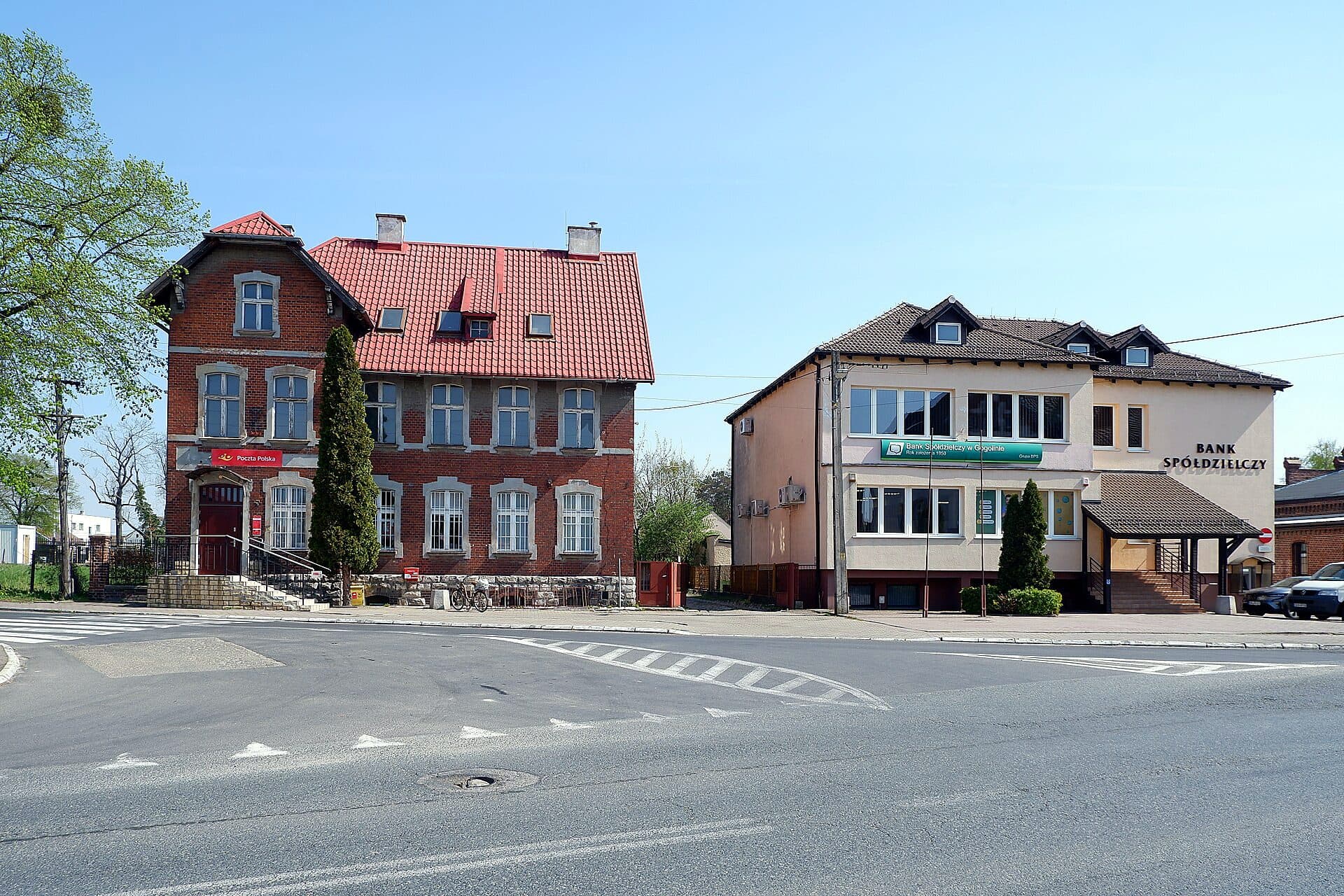
Cooperative banks function as full-service commercial banks but are owned by their members rather than by external shareholders. They typically offer the complete range of commercial banking services — current and savings accounts, business loans, trade finance, investment products — and operate through branch networks comparable to investor-owned banks.
Cooperative banks are dominant in several European countries, where they hold significant market shares in both retail and agricultural lending:
Rabobank — Netherlands
Rabobank is consistently ranked among the safest banks in the world and is the Netherlands' largest mortgage lender. It was founded in 1898 by Dutch farmers who needed affordable credit; it now operates in 40 countries and holds approximately €670 billion in total assets.
Rabobank's governance runs through a federation of local cooperative banks — individual members hold accounts at local Rabobanks, which are in turn members of the national cooperative. The national institution provides shared services, capital management, and international operations. This federal cooperative structure means millions of Dutch customers are technically co-owners of one of Europe's largest banks.
Rabobank is one of the world's most active lenders to the food and agricultural sector, reflecting its farming cooperative roots — approximately one-third of its global loan book is in food and agriculture.
Crédit Agricole — France
Crédit Agricole is one of the world's largest banks by total assets (approximately €2.2 trillion) and is organised as a cooperative. Founded in the 1890s to serve French farmers, it is now a full-service financial group operating in 47 countries.
The cooperative structure operates through 39 regional banks owned by 11.5 million members (shareholder-members who hold parts sociales, cooperative shares). These regional banks collectively own a controlling stake in Crédit Agricole SA, the listed national holding company. Crédit Agricole subsidiaries include LCL (retail banking), Amundi (Europe's largest asset manager), and Calyon (corporate and investment banking).
Volksbanken and Raiffeisenbanken — Germany and Austria
Germany has over 700 cooperative banks operating under the Volksbank and Raiffeisenbank brands, with combined assets exceeding €1 trillion. These banks trace their origins to two parallel 19th-century movements: urban credit cooperatives founded by Hermann Schulze-Delitzsch and rural agricultural credit cooperatives founded by Friedrich Wilhelm Raiffeisen.
The national umbrella organisation, BVR (Bundesverband der Deutschen Volksbanken und Raiffeisenbanken), provides deposit protection, shared services, and advocacy. Member banks are locally owned and governed, but share IT infrastructure, risk management, and compliance services through the central association.
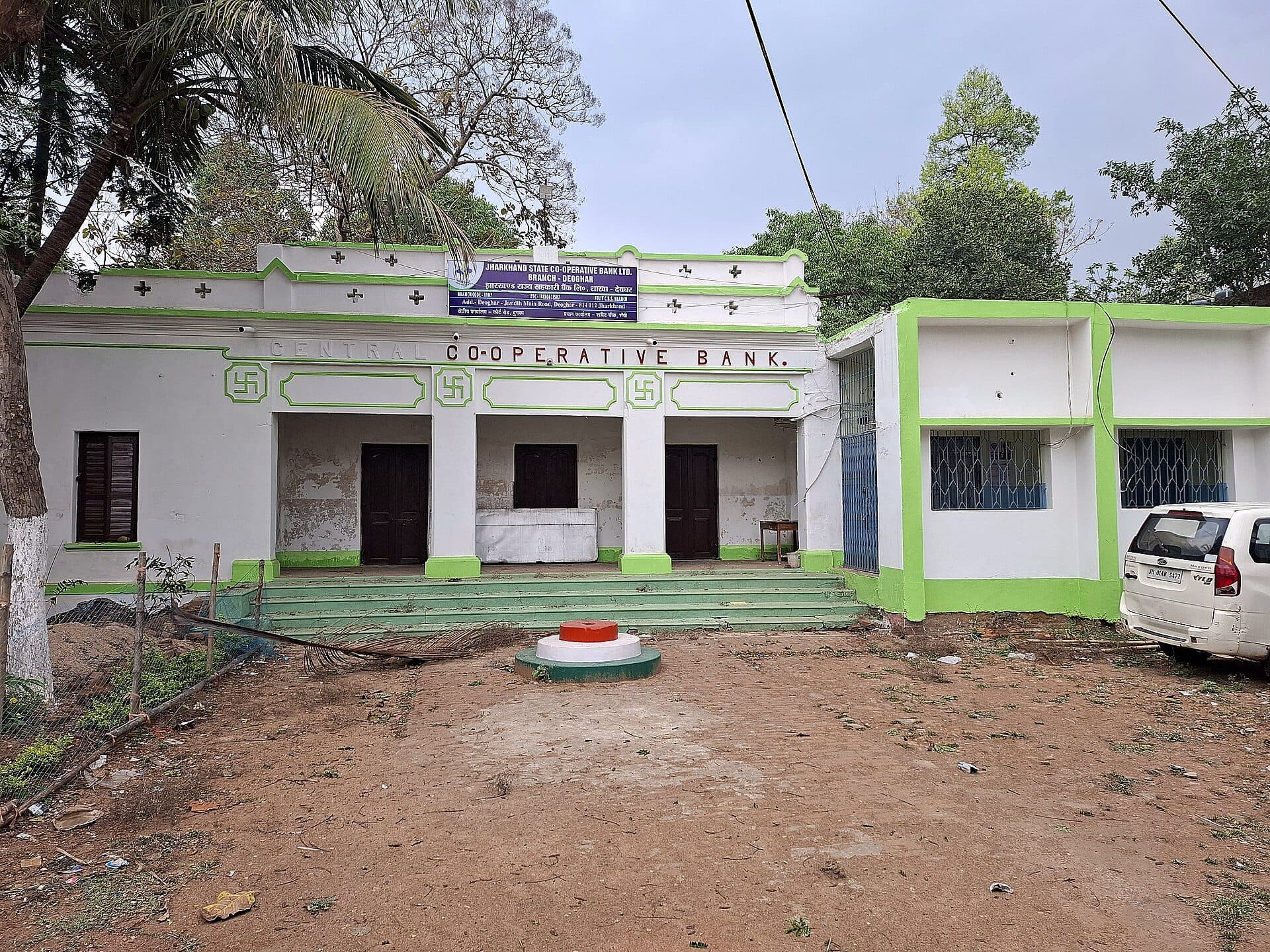
Cooperative Banks in India
India has one of the most extensive cooperative banking networks in the world. The structure runs three tiers:
- Primary Agricultural Credit Societies (PACS) — approximately 95,000 village-level societies providing crop loans
- District Central Cooperative Banks (DCCBs) — 371 district-level banks refinancing PACS
- State Cooperative Banks — 33 apex state-level banks
India also has over 1,500 Urban Cooperative Banks serving urban members, regulated by the Reserve Bank of India since 2020. The total membership across cooperative banking in India exceeds 290 million people, making it the largest cooperative banking network by membership in the world.
More on cooperatives in India →
SACCOs — Savings and Credit Cooperative Organisations
SACCOs are the dominant financial cooperative form in sub-Saharan Africa and are common in South and Southeast Asia. A SACCO operates on a member savings and lending model: members save regularly, and the pooled savings fund loans to members at rates below the commercial market.
SACCOs differ from credit unions primarily in their savings-first model. Members typically must save a qualifying amount before becoming eligible to borrow, and loan amounts are usually a multiple of savings (e.g., three times the member's shares). This structure builds savings discipline and ensures a funded loan pool.
Kenya
Kenya has one of the most developed SACCO sectors in the world. The SACCO Societies Regulatory Authority (SASRA) supervises deposit-taking SACCOs, of which approximately 175 are licensed. See cooperatives in Kenya for a broader picture of Kenya's cooperative economy. Total SACCO sector assets in Kenya exceeded KES 850 billion in recent years.
Mwalimu National SACCO — serving teachers — is one of Kenya's largest, with over 120,000 members and assets over KES 100 billion. Kenya Police SACCO, Harambee SACCO (civil servants), and Stima SACCO (electricity sector) are other large occupational SACCOs.
Kenya also has thousands of smaller community SACCOs not licensed for deposit-taking — these operate as closed-loop savings and lending clubs under lighter oversight.
Uganda, Tanzania, Rwanda
The East African region has a dense SACCO network. Uganda's SACCO regulatory framework covers over 2,000 registered SACCOs. Tanzania's cooperative sector is concentrated in agricultural SACCOs tied to coffee, tea, and cotton growing regions. Rwanda has made SACCO development a national financial inclusion strategy: the government targeted one SACCO per administrative sector, resulting in 416 SACCOs by 2020.
Philippines
The Philippines refers to SACCO-equivalent institutions as savings and credit cooperatives, regulated by the Cooperative Development Authority (CDA). These are the most common cooperative type in the country, with over 23,000 registered cooperatives, the majority operating some form of savings and credit service.
Philippine credit cooperatives are often occupational (teachers, barangay officials, church members) or community-based. They provide savings accounts, consumer loans, housing loans, and micro-enterprise credit. The National Confederation of Cooperatives (NATCCO) provides federation services, training, and liquidity support to member credit cooperatives.
More on Philippine cooperatives →
Building Societies
Building societies are cooperative or mutual institutions established primarily to fund residential mortgages for members. They originated in 18th-century Britain as temporary clubs where members saved until everyone could afford to build a home. Today, they are permanent financial institutions offering mortgages, savings accounts, and increasingly broader financial services.
The UK has 43 building societies with combined assets over £500 billion. Nationwide Building Society is the world's largest, with £280 billion in assets, 15 million members, and a full range of banking services. Unlike most UK banks, Nationwide returned to full mutual ownership after earlier conversions to bank status, making its "not a bank" positioning a key part of its member proposition.
In Australia, building societies have largely converted to banks or credit unions, though some mutual banks retain the mutual ownership structure (e.g., Great Southern Bank, formerly Credit Union Australia). Ireland retains active building societies including EBS (now a subsidiary of AIB, though retaining the brand).
The main distinction from credit unions is that building societies are specifically focused on mortgage lending and funded primarily by retail deposits, while credit unions tend toward personal and consumer lending with a wider services range.
Microfinance Cooperatives
Microfinance cooperatives provide small loans — typically US$50 to US$5,000 — to low-income members who lack the collateral or credit history to qualify for commercial bank loans. They differ from microfinance NGOs in being owned by their borrowing members rather than by donors or investors.
Grameen Bank (Bangladesh), though technically structured as a bank, operates on cooperative principles: borrowers own 95% of the bank through share purchases, and the remaining 5% is held by the Bangladesh government. Grameen has disbursed over $40 billion since 1983 and maintains a 97%+ repayment rate by organising borrowers into groups of five who provide social guarantees for each other's loans.
In India, Self-Help Group (SHG) cooperatives provide microfinance services to rural women. An SHG typically has 10–20 women who save a small fixed amount weekly, accumulate a fund, and lend to members. India had over 12 million SHGs with 140 million members as of recent data, linked to banks through the NABARD-funded SHG-bank linkage programme.
In Latin America, cooperative microfinance institutions are common in Bolivia, Peru, Ecuador, and Mexico. Bolivia's CRECER and Peru's cooperative-linked microfinance institutions demonstrate that cooperative microfinance can operate sustainably at scale.
How Financial Cooperatives Differ From Commercial Banks
The distinction runs deeper than ownership:
Profit distribution: A commercial bank pays dividends to shareholders who may have no relationship with the bank as customers. A financial cooperative returns surplus to the members who generated it — through lower loan rates, higher deposit rates, or year-end patronage dividends.
Governance: Commercial bank shareholders vote in proportion to the number of shares they hold — large investors have proportional control. In a financial cooperative, every member gets one vote regardless of their account balance.
Incentive alignment: A bank is incentivised to charge borrowers as much as possible and pay depositors as little as possible to maximise the spread for shareholders. A cooperative is incentivised to close that spread — because the members are both the borrowers and the savers.
Risk orientation: Commercial banks are primarily accountable to capital markets and short-term earnings expectations. Financial cooperatives, lacking external shareholders, can operate on longer time horizons and prioritise member stability over quarterly earnings. For a detailed comparison, see what is a credit union and credit union vs bank: the full comparison.
Tax treatment: In many countries, financial cooperatives receive favourable tax treatment, particularly on patronage dividends returned to members. In the United States, federal credit unions are exempt from federal income tax on the grounds that they serve a public interest.
Global Data on Financial Cooperatives
| Region | Credit unions | Members | Assets (USD) |
|---|---|---|---|
| Africa | 29,181 | 46.4M | $13.6B |
| Asia | 27,106 | 137.9M | $624.4B |
| Caribbean | 220 | 2.9M | $10.7B |
| Europe | 1,994 | 8.5M | $34.3B |
| Latin America | 3,630 | 56.5M | $216.9B |
| North America | 4,937 | 155.0M | $2.82T |
| Oceania | 69 | 5.5M | $110.3B |
| Total (WOCCU) | 67,137 | 412.7M | $3.8T+ |
Source: World Council of Credit Unions, 2024 Statistical Report, figures at the end of 2024. Based on WOCCU's survey of credit union associations, central banks and other cooperative financial organisations in 101 countries.
FAQ
What are the main types of financial cooperatives?
The main types are credit unions (USA, Canada, Australia), cooperative banks (Europe, India), SACCOs (East Africa, Philippines, South Asia), building societies (UK, Australia), and microfinance cooperatives (South Asia, Latin America, Africa). Each type has a different primary function: credit unions focus on savings and personal loans; cooperative banks offer full commercial banking; SACCOs emphasise savings discipline before lending; building societies concentrate on mortgages; microfinance cooperatives serve low-income borrowers with small loans.
How do financial cooperatives make money?
Financial cooperatives earn income primarily from the interest rate spread — the difference between what they charge borrowers (loan interest) and what they pay savers (deposit interest). They also collect fees for services. Because there are no external shareholders to pay, a cooperative can operate on a narrower spread than a commercial bank and still be financially viable, which is why loan rates are typically lower and deposit rates higher for members.
Are financial cooperatives regulated like commercial banks?
Yes, in most countries. Credit unions in the US are regulated by the NCUA (federal) or state banking regulators. Cooperative banks in the EU are regulated by the European Central Bank and national authorities. SACCOs in Kenya are regulated by SASRA. Building societies in the UK are regulated by the Financial Conduct Authority and Prudential Regulation Authority. Lighter regulation applies only to smaller informal savings groups and non-deposit-taking cooperatives.
What is a SACCO?
A SACCO stands for Savings and Credit Cooperative Organisation. SACCOs are most common in East Africa (particularly Kenya, Uganda, Tanzania) and the Philippines. Members save regularly — often a fixed amount per month — and accumulate shares in the cooperative. Loan eligibility is typically based on the member's savings balance (e.g., three times shares). SACCOs are distinguished from credit unions by their emphasis on savings mobilisation before lending, and by the typically occupational or community common bond structure.
Which country has the most developed financial cooperative sector?
Several countries stand out. The United States has the largest total assets in credit unions ($2.50 trillion, NCUA, June 2026). Germany has the most deeply embedded cooperative banking system, with Volksbanken and Raiffeisenbanken holding over €1 trillion. France's Crédit Agricole is the world's largest cooperative bank by assets. India has the most members across its cooperative banking network (290+ million). Kenya has the most developed SACCO regulatory framework among emerging economies.
Can financial cooperatives fail?
Yes, though well-regulated ones have strong protection mechanisms. In the US, federally insured credit union deposits up to $250,000 are protected by the NCUA Share Insurance Fund. In Europe, cooperative banks participate in national deposit guarantee schemes. Failures do occur — typically from concentrated loan losses, fraud, or governance failures — but they are rarer than commercial bank failures proportionally, partly because cooperatives tend toward more conservative lending. Unregulated informal savings cooperatives carry higher risk.
What is the difference between a cooperative bank and a credit union?
In practice, the main differences are size, services, and regulation. Cooperative banks typically offer the full range of commercial banking services (business lending, trade finance, investment products) and operate on the scale of large commercial banks. Credit unions typically focus on retail savings and consumer lending for individual members. The governance principle — member ownership and one-member-one-vote — is the same in both. In some countries, the distinction is legally defined; in others, it is more a matter of scale and tradition.
See also:

References & further reading
This guide is researched against primary sources. Where we cite figures, they reflect the most recent data published by these organisations at the time of writing.
- 1.2024 Statistical Report — World Council of Credit Unions
- 2.Cooperative identity, values & principles — International Cooperative Alliance
Continue Reading
Find Cooperatives Worldwide
Browse 26,000+ cooperatives by sector and country in our free directory.