Morocco has over 29,000 registered cooperatives, with argan oil cooperatives run by rural Berber women among the most internationally recognized cooperative enterprises in Africa — exporting €50 million or more in argan products annually to cosmetics and food markets worldwide.
Morocco Cooperatives at a Glance
| Indicator | Figure |
|---|---|
| Registered cooperatives | 29,000+ |
| Total members | 550,000+ |
| Primary law | Law 112-12 on Cooperatives (2014) |
| Regulator | ODCO (Office de Développement de la Coopération) |
| Founded | 1962 |
| Argan cooperatives | 300+ |
| Argan export value | €50M+ annually |
| Largest dairy cooperative | COPAG (15,000 members) |
| Key agricultural strategy | Plan Maroc Vert (Green Morocco Plan) |
History: From French Protectorate to ODCO
Colonial Introduction of Cooperatives
Morocco's cooperative sector has its roots in the French Protectorate period (1912–1956). French colonial administration introduced cooperative structures primarily for settler agriculture in the productive Atlantic plains — the Chaouia, Gharb, and Haouz regions — and for the management of phosphate and mining sector logistics.
These early cooperatives served mainly French settler farmers and colonial enterprise, with limited participation from the Moroccan population. Indigenous Moroccans engaged in collective agricultural arrangements through traditional communal land systems (collectivités ethniques and jmaas) that shared some cooperative characteristics but operated outside the formal cooperative legal framework.
Post-Independence Development
After independence in 1956, the Moroccan government inherited the colonial cooperative infrastructure and made a deliberate policy decision to extend cooperative organization to the Moroccan rural population. The establishment of ODCO — Office de Développement de la Coopération in 1962 was the founding institutional act of Morocco's post-independence cooperative sector.
ODCO's founding mandate was threefold: to promote cooperative organization across sectors, to provide technical and management training to cooperative members and leaders, and to audit and regulate registered cooperatives. ODCO remains the central cooperative authority in Morocco today, one of the oldest and most active cooperative development offices in Africa.
Throughout the 1960s and 1970s, cooperatives spread into agricultural sectors — olive oil, cereals, citrus — and into artisan crafts through partnerships with the Ministry of Artisanship. The dairy sector saw the emergence of collection cooperatives that later grew into the large dairy processors of today.
Law 112-12: Morocco's Modern Cooperative Framework
The current regulatory framework is established by Law 112-12 on Cooperatives, enacted in 2014. This law replaced earlier legislation and brought Morocco's cooperative legal framework into alignment with international cooperative principles, including those of the International Cooperative Alliance (ICA).
Key provisions of Law 112-12:
- Establishes ODCO as the official development, promotion, and oversight body
- Sets minimum membership at 7 persons for formation
- Requires annual general assemblies and audited accounts
- Creates a cooperative federation structure alongside primary cooperatives
- Strengthens provisions for women's cooperatives and small artisan cooperatives
- Allows cooperatives to participate in public procurement
ODCO: The Development and Regulatory Authority
ODCO (Office de Développement de la Coopération) is Morocco's central cooperative authority, operating under the supervision of the Ministry in Charge of Social Economy. ODCO's functions include:
- Registration of new cooperative societies
- Technical assistance and management training for cooperative members and managers
- Auditing of cooperative accounts (or directing approved auditors)
- Promotion of cooperative formation in priority sectors and underserved regions
- Research and statistics — maintaining the national cooperative registry
ODCO operates regional offices across Morocco's main cities, providing localized registration and training services. In the Souss-Massa and Tiznit regions — where argan cooperatives are concentrated — ODCO has specific programs supporting women's cooperative development.
ODCO also coordinates with international development partners including UNDP Morocco, GIZ, AFD (Agence Française de Développement), and EU development programs that have funded training, certification, and market access programs for women's cooperatives.
Argan Oil Cooperatives: Morocco's International Showcase
The Argan Tree and Women's Cooperatives
The argan tree (Argania spinosa) grows almost exclusively in a 2.5 million hectare UNESCO Biosphere Reserve in southwestern Morocco, primarily in the Sous Valley, Anti-Atlas, and Haha region near Essaouira. Argan oil — extracted from the kernels of argan fruits — is used both in food (culinary oil with a nutty flavor) and cosmetics (renowned for its skin and hair properties).
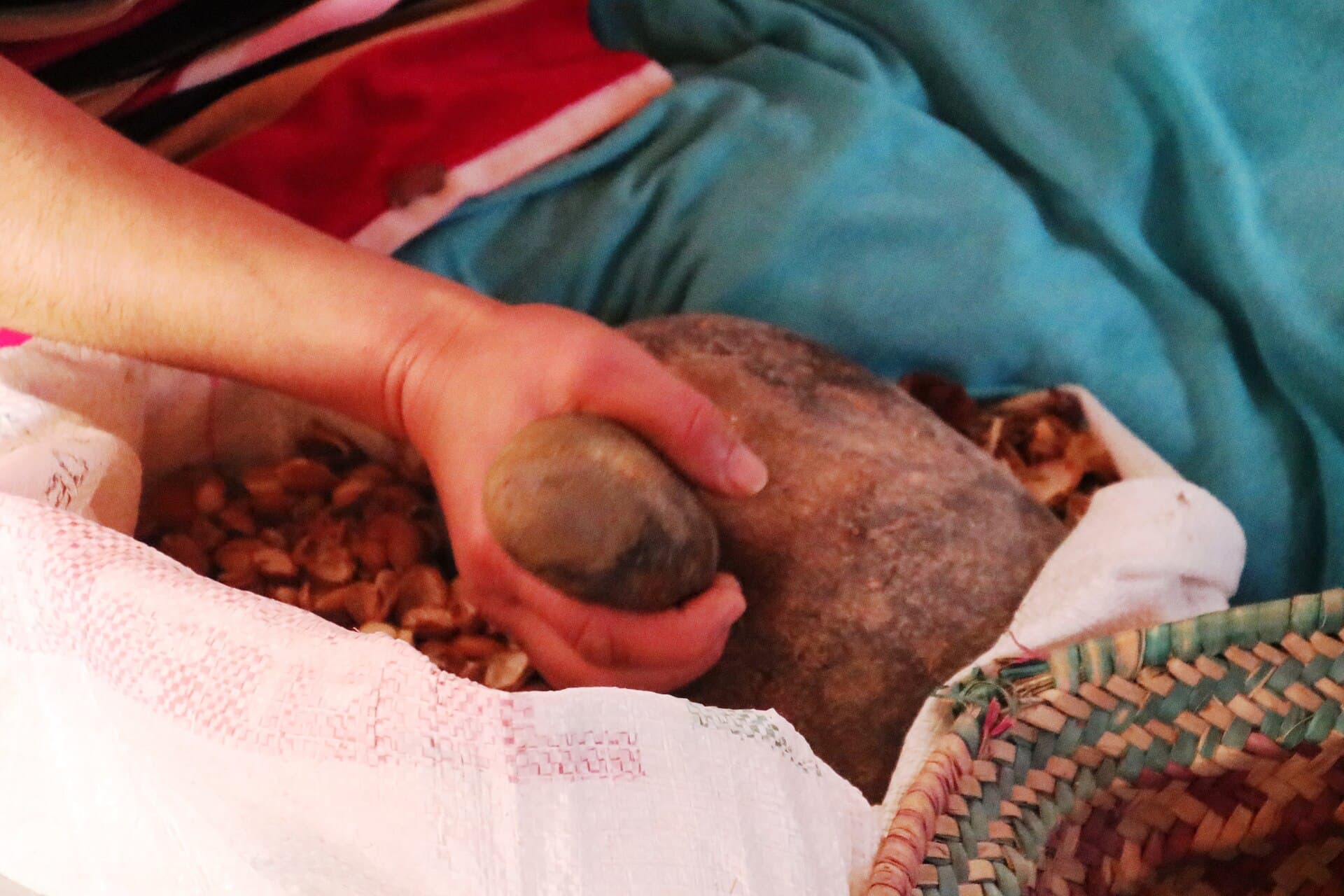
Argan oil extraction is traditionally women's work in Berber communities. The process — cracking the hard argan nut, extracting the kernel, cold-pressing the oil — is labor-intensive and has historically provided supplementary income for rural women. The cooperative model transformed this subsistence-level activity into an international export industry.
Morocco has over 300 registered women's argan cooperatives operating in the argan biosphere zone. These function as marketing cooperatives — pooling production, maintaining quality standards, and accessing export markets collectively. These cooperatives typically have 15–50 women members who collectively produce, quality-control, and market argan oil under a cooperative label, often with organic and fair trade certification.
Notable Argan Cooperatives
Targanine (Agadir) is among Morocco's most exported argan cooperative brands. Established with ODCO and development NGO support, Targanine produces certified organic culinary and cosmetic argan oil for export to European food and cosmetics markets. It has partnerships with French cosmetics companies and exports to specialty food retailers across Europe and North America.
Cooperative Tiguemine in the Sous region produces cosmetic-grade argan oil and has achieved ECOCERT organic certification. Its members are Tachelhit-speaking Berber women from rural villages in the Anti-Atlas.
Amlou cooperatives produce amlou — a traditional Moroccan paste of argan oil, almonds, and honey — alongside pure argan oil. These cooperatives sell domestically in medinas and souks as well as through export channels.
The Union of Women's Argan Cooperatives (UCFA) federates multiple primary argan cooperatives, providing collective negotiating power with buyers, joint quality standards, and shared access to certification bodies.
| Argan Cooperative Type | Products | Markets | Certification |
|---|---|---|---|
| Culinary oil coops | Food-grade argan oil, amlou | Gourmet food Europe/US | Organic, Fairtrade |
| Cosmetic oil coops | Cold-pressed cosmetic oil | Beauty brands EU/Asia | ECOCERT, COSMOS |
| Mixed product coops | Oil, soap, skincare | Domestic + export | Variable |
| UCFA (union) | Collective marketing | International distributors | Multiple |
Economic Impact
Morocco's argan oil export sector has grown from a cottage industry in the 1990s to an organized export sector generating over €50 million annually. Women's cooperatives are responsible for a significant share of this production, with individual cooperatives reporting member incomes 3–5 times higher than non-member rural women in the same villages, according to UNDP Morocco assessments.
The international cosmetics industry has been the primary growth driver — major brands including L'Oréal, The Body Shop, and dozens of artisan skincare brands source argan oil from Moroccan cooperatives. Culinary argan oil has a smaller but growing market in gourmet food retail.
Agricultural Cooperatives: From Citrus to Cereals
COPAG: Morocco's Largest Dairy Cooperative
COPAG (Coopérative Agricole de la Province d'Agadir) is Morocco's largest dairy cooperative by membership and revenue. Founded in 1987, COPAG collects milk from over 15,000 farmer members in the Souss-Massa region and processes it into fresh milk, UHT milk, yogurt, butter, and cheese under the Jibal brand.
COPAG's model is vertically integrated: it provides cattle feed, veterinary services, and technical support to member farmers, collects milk from chilling centers twice daily, processes at its Inzegane plant, and distributes across Morocco through its own fleet.
By 2023, COPAG had annual revenue exceeding MAD 2.5 billion (approximately USD 250 million), making it one of Morocco's largest food companies by revenue and one of the largest cooperative enterprises in Africa by turnover.
Souss-Massa Fruit and Vegetable Cooperatives
The Souss-Massa region south of Agadir is Morocco's primary fresh produce export zone. Citrus, tomatoes, green beans, strawberries, and courgettes grown by member-farmers in cooperatives are packed and exported under cooperative or group marketing structures to European supermarkets.
Agricola cooperatives in the region provide collective irrigation management — critical in a semi-arid zone where water allocation through the Souss aquifer system requires coordinated management across hundreds of farms.
Beni Mellal Orange and Citrus Cooperatives
The Beni Mellal-Khenifra region in the Atlas foothills is Morocco's second major citrus production zone. Cooperative unions federate primary orange and clementine growers for joint export marketing, shared cold storage, and collective certification for European market phytosanitary requirements.
Olive Oil Cooperatives
Morocco is among the world's top 10 olive oil producers. Olive cooperatives are widespread in the Meknès, Beni Mellal, Marrakech-Safi, and Oriental regions. Member farmers bring harvested olives to cooperative mills for pressing, with processed oil either distributed to members or marketed collectively. Cooperative olive mills have allowed smallholder farmers to access modern pressing technology that would be unaffordable individually.
Artisan Cooperatives and Maison de l'Artisan
Morocco has a rich tradition of craft production — zellige tilework, leather tanning, carpet weaving, pottery, silver jewellery, and woodwork. The government organizes artisan cooperatives through partnerships between ODCO and the Maison de l'Artisan (administered by the Ministry of Tourism and Artisanship).
Carpet cooperatives are particularly numerous in the High Atlas, Middle Atlas, and Rabat. Female weavers organized into cooperatives produce Beni Ourain (cream wool with geometric patterns), Azilal (colorful Berber patterns), and Rabati (formal urban pile carpets) for domestic and export markets. Cooperative certification of geographic origin adds value in international antique and artisan markets.
Leather cooperatives in Fès are organized around the city's famous tanneries. The Chouara tannery district, though primarily organized as private family enterprises, includes cooperative elements for collective dyeing vat access. Marrakech's leather and babouche (slipper) cooperatives organize production for the tourist and export markets.
Pottery cooperatives in Safi — Morocco's historic pottery capital — organize ceramic producers for collective kiln use, glazing infrastructure, and tourist-market sales.
Fishing Cooperatives: Atlantic and Mediterranean Coasts
Morocco has the longest Atlantic coastline in Africa and one of the world's richest marine fishing zones. Fisheries cooperatives organize artisanal fishers (small-boat fishers distinct from the industrial trawler fleet) for:
- Collective port and unloading infrastructure access
- Ice procurement and cold chain logistics
- Collective negotiation with fish buyers at auction quays
- Social protection programs for fishing households
The Office National des Pêches (ONP) works with fishing cooperatives in coastal towns from Dakhla in the south to Nador in the north. Sardine, anchovy, mackerel, and swordfish are key cooperative-marketed species.
Women's Cooperatives and Plan Maroc Vert
The Plan Maroc Vert (Green Morocco Plan), launched in 2008 under the Ministry of Agriculture, made women's cooperative development an explicit policy priority. The plan allocated funding and technical support to help rural women form cooperatives in food processing, argan oil, saffron (Taliouine region), rose water (Dades Valley), and other high-value niche agricultural products.
The Dades and Dadès Valley saffron cooperatives — organized around Moroccan saffron (crocus sativus), the world's most expensive spice by weight — bring women producers together for collective drying, grading, packaging, and export certification. Morocco exports saffron primarily to Middle Eastern markets and European specialty food buyers.
Rosewater cooperatives in the Dades Gorge near Kelaa M'Gouna produce rose water and rose oil from the annual damask rose harvest. The Valley of Roses Festival, held annually in May, is partly organized around cooperative marketing infrastructure.
UNDP's Gender Equality Seal program has worked with ODCO to certify women's cooperatives meeting gender standards for governance and membership — providing market access advantages with gender-aware buyers in Europe and North America.
Challenges Facing Moroccan Cooperatives
Member literacy and governance capacity remain significant constraints, particularly in rural women's cooperatives. Many argan cooperative members have little formal education, making accounting, contract management, and quality certification documentation challenging. ODCO and donor partners have invested in literacy and business skills programs, but coverage is patchy relative to the number of cooperatives.
Governance succession is acute in cooperatives founded by charismatic individual leaders. When founding presidents or managers depart, cooperatives sometimes fragment or lose market relationships they cannot reconstruct.
Quality consistency is an ongoing challenge for export-oriented cooperatives. Argan oil quality varies with extraction methods, storage conditions, and shelf life. Building consistent quality standards across 300+ independent cooperatives for demanding European cosmetics buyers requires sustained technical support.
Market dependence on a single buyer or certification scheme creates fragility. Some argan cooperatives have built export relationships with a single European importer; if that relationship breaks, the cooperative loses its market connection entirely.
Rural-urban migration is thinning the labor pool in remote argan-producing regions. Young women who might otherwise join cooperatives are moving to cities, creating succession challenges for the next generation of cooperative membership.
Frequently Asked Questions
How many cooperatives are there in Morocco? Morocco had over 29,000 registered cooperative societies as of 2023, with more than 550,000 members. The sector spans agriculture, artisan crafts, fishing, dairy, and services. Argan oil cooperatives in the Sous region are the most internationally recognized. ODCO maintains the national registry.
What is ODCO? ODCO (Office de Développement de la Coopération) is Morocco's official cooperative development and oversight authority, established in 1962. It registers cooperatives, provides technical training, conducts audits, and promotes cooperative formation under the authority of the Ministry in Charge of Social Economy.
What law governs cooperatives in Morocco? Cooperatives in Morocco operate under Law 112-12 on Cooperatives, enacted in 2014. This law sets formation requirements (minimum 7 members), governance standards, auditing obligations, and the role of ODCO as the oversight body.
Why are argan oil cooperatives famous? Morocco's 300+ women's argan oil cooperatives are internationally recognized because they transformed traditional Berber women's labor into an organized export industry worth over €50 million annually. They provide rural women with incomes 3–5 times higher than non-member neighbors, while supplying premium argan oil to global cosmetics and food companies. ECOCERT-certified argan oil from cooperative sources commands the highest prices.
What is COPAG? COPAG (Coopérative Agricole de la Province d'Agadir) is Morocco's largest dairy cooperative, founded in 1987. With 15,000+ farmer members in the Souss-Massa region, it produces and markets dairy products under the Jibal brand, with annual revenue exceeding MAD 2.5 billion (approximately USD 250 million).
What is Plan Maroc Vert and how does it relate to cooperatives? The Plan Maroc Vert (Green Morocco Plan), launched in 2008, is Morocco's agricultural transformation strategy. It explicitly prioritized women's cooperative development in high-value niche products — argan oil, saffron, rose water, and other specialty agricultural items. It provided funding and technical support for cooperative formation and market access programs in rural Morocco.
Are cooperative products from Morocco certified fair trade? Some are. Several argan cooperatives hold Fairtrade certification or work under World Fair Trade Organization (WFTO) principles. Many hold ECOCERT organic certification. The mix of certifications varies by cooperative and export market — European cosmetics buyers often require COSMOS or ECOCERT; food buyers may require organic or Fairtrade.
Related Articles
References & further reading
This guide is researched against primary sources. Where we cite figures, they reflect the most recent data published by these organisations at the time of writing.
- 1.Facts & figures on the cooperative movement — International Cooperative Alliance
- 2.Cooperatives and the world of work — International Labour Organization
Find Cooperatives Worldwide
Browse 26,000+ cooperatives by sector and country in our free directory.