Nepal has over 35,000 cooperative societies with more than 6 million members — the cooperative sector contributes an estimated 5–7% of national GDP, a remarkably high share for a low-income country, though a governance crisis between 2021 and 2023 severely damaged member trust and triggered the largest cooperative regulatory overhaul in Nepal's history.
Nepal Cooperatives at a Glance
| Indicator | Figure |
|---|---|
| Registered cooperative societies | 35,000+ |
| Total members | 6 million+ |
| Share of GDP | ~5–7% |
| Primary law | Cooperative Act 2074 (2017) |
| Regulator | Department of Cooperatives, Ministry of Land Management |
| Apex body | NEFSCUN (National Cooperative Federation of Nepal) |
| Dominant type | Savings and Credit Cooperatives (SACCOs) |
| Registered SACCOs | 24,000+ |
| Cooperative crisis period | 2021–2023 |
| Deposit guarantee | DCGC (Deposit and Credit Guarantee Corporation) |
History: From Bakula to the 1990 Reform
The First Cooperative: Bakula Savings and Credit (1956)
Nepal's formal cooperative history begins in 1956 with the establishment of the Bakula Savings and Credit Cooperative in Chitwan district. This was the first registered cooperative under Nepal's nascent legal framework, organized as part of Panchayat-era rural development programs introduced by King Mahendra's government.
The early cooperative framework was modeled partly on Indian cooperative law and partly on the United Nations Technical Assistance program's cooperative development guidance for post-colonial nations. Cooperatives in this era were primarily agricultural credit societies and were closely supervised — and often controlled — by the government.
Through the Panchayat period (1960–1990), Nepal's cooperative sector grew slowly under state guidance. Agricultural cooperatives provided credit and inputs to farmers, and dairy cooperatives began organizing milk collection in the Kathmandu Valley and Terai. However, genuine member governance was limited — cooperatives were effectively extensions of government agricultural programs rather than autonomous member-run enterprises.
The 1990 Political Transition and Cooperative Expansion
Nepal's 1990 political revolution — which ended the absolute monarchy and established multiparty democracy — transformed the cooperative sector. The Cooperative Act of 1992 (sometimes referred to as the 1991 Act based on its drafting year) established cooperatives as autonomous, member-governed organizations independent of direct state control.
This legal shift had immediate and dramatic effects. Cooperative registrations accelerated rapidly through the 1990s and 2000s as political liberalization, urbanization, and rural remittance income created demand for local savings and credit services that formal banks did not provide. By 2010, Nepal had over 20,000 registered cooperatives; by 2017, over 34,000.
The 2015 Earthquake and Cooperative Deposits
The April 2015 Gorkha earthquake (magnitude 7.8) devastated Nepal, killing nearly 9,000 people and destroying hundreds of thousands of structures. It also created a severe, if temporary, shock to the cooperative sector.
In affected districts — Gorkha, Sindhupalchok, Nuwakot, Kavrepalanchok — members rushed to withdraw savings from cooperatives. Several cooperatives in heavily damaged areas could not meet withdrawal demands because they had lent member savings as long-term agricultural or housing loans. This was the first major stress test of Nepal's cooperative deposit system.
The Deposit and Credit Guarantee Corporation (DCGC) — which covers cooperative deposits — made payments to affected cooperatives, demonstrating the deposit guarantee system's value. But the earthquake also revealed structural vulnerabilities: many cooperatives were heavily invested in illiquid real estate loans in the same geographic area as their depositors, creating concentration risk that undermined the safety of member savings.
Regulatory Framework: Cooperative Act 2074 (2017)
The current legal framework is the Cooperative Act 2074 (2017 in the Gregorian calendar). This replaced the 1992 Act and significantly tightened governance and financial management requirements.
Key provisions:
- Department of Cooperatives under the Ministry of Land Management, Cooperatives and Poverty Alleviation is the primary registrar and regulator
- Provincial cooperative registrars at each of Nepal's 7 provinces oversee provincial and local cooperatives
- Annual audits are mandatory; cooperatives must submit accounts within 6 months of fiscal year end
- Board members face personal liability for governance failures and fraud
- The DCGC provides deposit guarantee coverage up to NPR 300,000 per member
- Cooperatives above certain asset thresholds face enhanced regulatory scrutiny
Nepal's cooperative sector is organized at three levels under this act:
- Primary cooperatives — registered at local level, serving a defined community
- Central cooperative unions — federations at district or provincial level
- National apex bodies — NEFSCUN (savings and credit) and sector federations
Savings and Credit Cooperatives: The Dominant Model
Nepal's 24,000+ registered Savings and Credit Cooperatives (SACCOs) are by far the largest category, both by number and by total assets. SACCOs collect deposits from members and lend within the membership, providing financial services in areas where commercial banks have limited reach.
The typical Nepali SACCO serves a defined community — a ward, a neighborhood, an occupational group, or a village. Members buy shares, make regular deposits, and access loans at interest rates generally between 12–18% per year — higher than the cooperative ideal but lower than informal moneylender rates.
Total SACCO assets in Nepal were estimated at NPR 450–500 billion (approximately USD 3.5–4 billion) before the 2021–2023 crisis, making the cooperative financial sector a significant component of Nepal's financial system alongside commercial banks and development banks.
Nepal's SACCOs are important in areas where commercial banks have not penetrated: mountain districts, remote hill areas, and the Madhesh plains where landless and low-income farmers have difficulty meeting formal bank collateral requirements.
Multipurpose Cooperatives: Agriculture, Consumer Goods, Insurance
Beyond SACCOs, Nepal has significant multipurpose cooperatives that combine savings and credit with agricultural input supply, consumer goods, and increasingly, cooperative insurance.
Multipurpose cooperatives in the Terai (the flat plains bordering India) aggregate paddy rice, wheat, and maize from smallholder farmers for bulk sale to mills and traders. They provide collective access to fertilizer, improved seed, and pesticides at below-retail prices. Some multipurpose cooperatives operate cooperative shops selling consumer goods to members.
A small but growing number of cooperatives have entered cooperative insurance — pooling member premiums to cover crop failure, livestock loss, and health emergencies. These operate under special frameworks established jointly by the Insurance Board of Nepal and the Department of Cooperatives.
Tea Cooperatives: Ilam and Kanchanjangha
Nepal produces high-quality orthodox tea in the eastern hills — the Ilam and Taplejung districts grow teas that compete with Darjeeling teas for flavor profile and international specialty market position.
Kanchanjangha Tea Estate and Research Centre Cooperative in Taplejung district is Nepal's most internationally recognized tea cooperative. It operates as an agricultural cooperative with direct-trade relationships that bypass commodity brokers. Established in 1984 with Swiss development assistance, it became one of the world's first certified organic tea cooperatives — achieving organic certification in the early 1990s before organic tea was common.
Kanchanjangha tea cooperative:
- Member farmers: 650+ smallholder tea growers
- Certification: Organic (IMO Control), Fairtrade
- Export markets: Europe, Japan, United States
- Products: First flush, second flush, autumnal orthodox teas, white tea
- Price premium: 30–50% above conventional Nepal tea through Fairtrade and organic channels
Ilam Tea Cooperatives in Ilam district — Nepal's largest tea-growing area — organize smallholders around multiple tea collection and processing cooperatives. Ilam teas are sold domestically and exported primarily to India, Europe, and Japan.
| Tea Cooperative | District | Members | Certification | Key Markets |
|---|---|---|---|---|
| Kanchanjangha | Taplejung | 650+ | Organic, Fairtrade | EU, Japan, US |
| Ilam Tea Cooperative | Ilam | 400+ | Organic | India, EU |
| Sandakpur Tea | Ilam | 300+ | Organic | Specialty EU |
| Antu Tea | Ilam | 200+ | Conventional | Domestic, India |
Coffee Cooperatives: Gulmi and Palpa
Nepal's arabica coffee sector has grown from near-zero in the 1990s to a niche specialty export industry. Coffee grows best in Nepal's mid-hill districts at 1,000–2,000 metres elevation, particularly Gulmi, Palpa, Syangja, Kaski, and Lamjung.
Coffee cooperatives in these districts organize smallholder farmers — most with less than half a hectare under coffee — for collective wet processing, drying, and export. Nepal coffee has attracted specialty buyer attention because of its flavor profiles (fruity, floral) and the story of high-altitude, small-scale production.
The Gulmi Durbar Coffee Cooperative and the Nepal Coffee Producers Association (a federation of cooperatives and producers) have achieved limited direct export to Japanese and American specialty roasters. Nepal coffee fetches $8–15 per pound FOB (free on board) in direct-trade transactions — among the highest in Asia.
Dairy Cooperatives and the Dairy Development Corporation
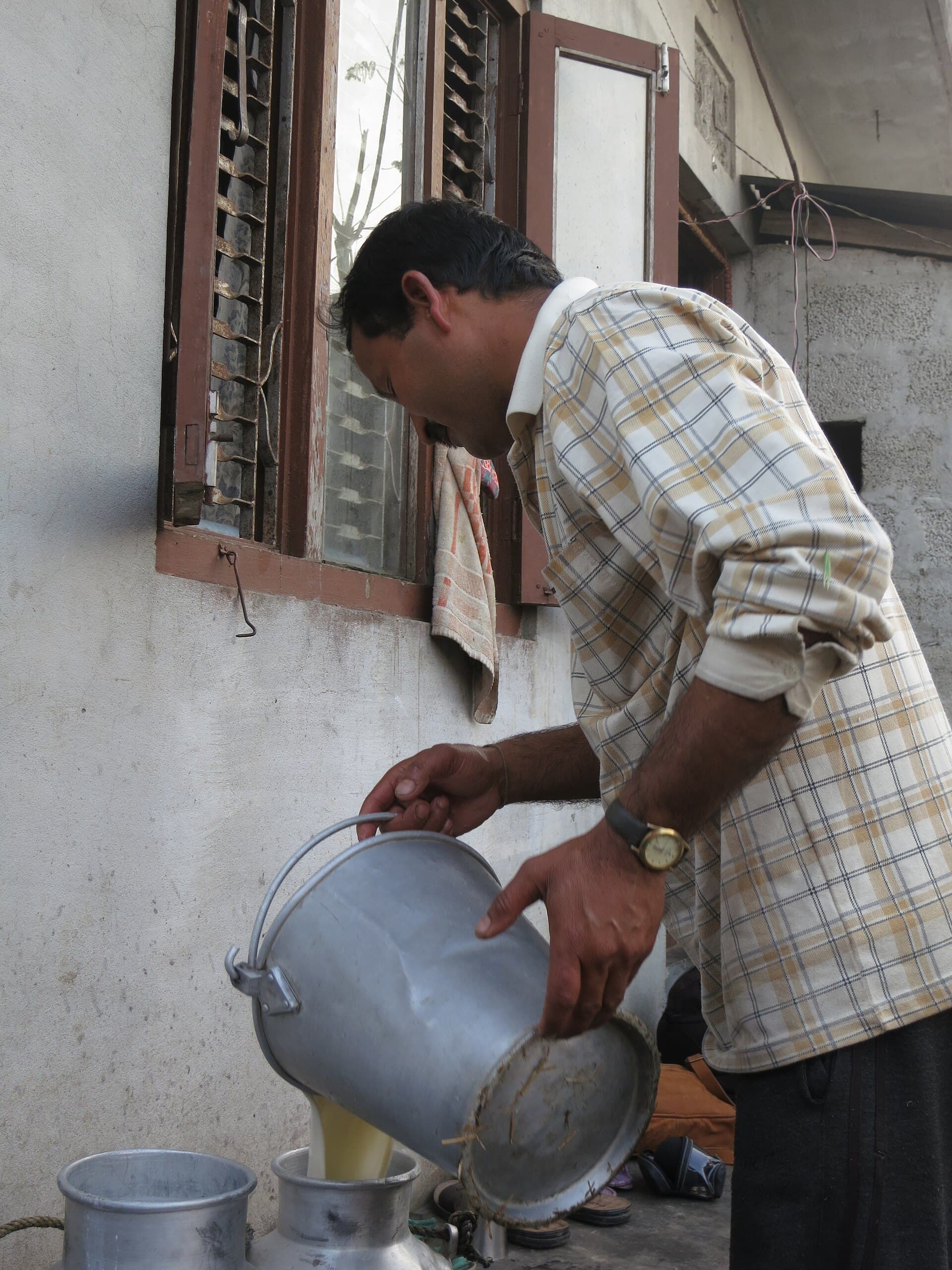
Dairy cooperatives in Nepal have a 60-year history. The Dairy Development Corporation (DDC) — established 1969 as a government enterprise — built Nepal's national milk collection and processing system working alongside cooperative societies.
In the Kathmandu Valley, Lalitpur Dairy Cooperative and other valley cooperatives collect milk from peri-urban farmers and supply DDC for processing. In the Terai, cooperatives organize milk from smallholder buffalo and cow herds for chilling and transport to urban centers.
Nepal's dairy cooperative model has been less transformative than India's AMUL — for context on the AMUL model, see Cooperatives in India — partly because DDC retained processing control rather than spinning it to cooperatives, and partly because the small scale of Nepal's market limits the investments cooperatives can make in processing infrastructure.
Handicraft and Women's Empowerment Cooperatives
Nepal's handicraft sector — pashmina, hand-knotted carpets, thangka painting, silver jewellery, hand-made paper — includes significant cooperative participation.
Pashmina cooperatives in Kathmandu organize artisans producing hand-woven pashmina and cashmere products for export. Cooperative certification distinguishes authentic hand-woven pashmina from machine-made and mixed-fibre products that damaged Nepal's pashmina reputation in the 2000s.
Carpet cooperatives in Kathmandu and Pokhara bring together hand-knotted Tibetan-design carpet weavers for collective quality control, shared showroom access, and export documentation. Hand-knotted Tibetan-design carpets from Nepal are Nepal's second-largest export after readymade garments.
Women's cooperative programs have been a policy priority since the early 2000s, with the government and NGOs (Helvetas, CARE Nepal, Oxfam) supporting cooperative formation among women in marginalized communities — Dalits, indigenous nationalities (janajati), and Muslim communities in the Terai — for savings, credit, and income generation through handicraft production.
NEFSCUN and Cooperative Apex Bodies
NEFSCUN (National Cooperative Federation of Nepal) is the apex body for savings and credit cooperatives in Nepal. Established in 1993, NEFSCUN:
- Federates district-level SACCO unions
- Provides training, audit support, and technical assistance to member SACCOs
- Represents the cooperative sector in government policy discussions
- Operates a central liquidity fund that member SACCOs can access in short-term cash flow emergencies
- Advocates for cooperative-friendly regulatory reform
NEFSCUN is affiliated with the International Cooperative Alliance (ICA) and World Council of Credit Unions (WOCCU), giving it connections to global cooperative networks.
CECI (Central Cooperative Consumer Institute) serves consumer cooperatives at the apex level, though consumer cooperatives are a smaller part of Nepal's sector than SACCOs.
Nepal's Cooperative Crisis (2021–2023)
The most damaging event in Nepal's cooperative history was the cooperative governance crisis that erupted publicly in 2021 and intensified through 2022–2023. The crisis had structural roots dating to the rapid expansion of the 2000s and 2010s.
Origins of the Crisis
Nepal's SACCO sector grew faster than governance capacity. Between 2010 and 2020, cooperative assets grew roughly fivefold — driven by remittance income (Nepal receives some of the world's highest remittances as a percentage of GDP, around 25–30% annually) flowing through cooperative savings accounts.
Several categories of problems accumulated:
Governance failures: Many SACCOs were effectively controlled by their founders or a small clique, without meaningful member oversight. Annual general assemblies were held in form but not in substance. External audits were superficial or manipulated.
Loan concentration: Cooperatives channeled large shares of member savings into real estate loans — often to board members, their relatives, or related parties — at a time when Nepal's real estate market was inflating. When real estate values plateaued and then fell, these loans became non-performing.
Ponzi-adjacent structures: A number of cooperatives attracted deposits by offering abnormally high interest rates (15–25%), using new deposits to pay returns to existing depositors — a pattern unsustainable without genuine loan returns.
Regulatory gaps: The Department of Cooperatives was thinly staffed and focused on registration rather than ongoing supervision. Large SACCOs with NPR 1–5 billion in assets operated with the same light-touch oversight as small village societies.
The Collapse
Starting in 2021, several prominent cooperatives — particularly in urban areas of Kathmandu Valley, Pokhara, and Butwal — suspended withdrawals after their liquidity was exhausted. Members who had deposited life savings could not access their money.
The Nepal Police, Nepal Rastra Bank, and Department of Cooperatives identified over 2,000 problem cooperatives across the country. Criminal charges were filed against cooperative leaders in hundreds of cases. Nepal's parliament established a parliamentary investigation committee.
The total value of member deposits frozen or at risk was estimated at NPR 30–50 billion (USD 225–375 million) — affecting hundreds of thousands of ordinary depositors.
Government Response
The government responded with:
- Emergency liquidity support to cooperatives where depositors could be paid out through asset liquidation
- Criminal prosecution of cooperative managers and board members implicated in fraud
- A regulatory overhaul — increasing Department of Cooperatives staffing, introducing risk-based supervision for large cooperatives, and tightening real estate loan limits
- Deposit verification programs to establish which depositors were owed what in problem cooperatives
- Mandatory merger of certain small, unviable cooperatives into stronger nearby cooperatives
The DCGC's deposit guarantee (NPR 300,000 per member) provided some protection, but many depositors had balances well above this threshold and could not be fully covered.
Challenges Beyond the Crisis
Over-reliance on a single cooperative model is a structural weakness. Nepal has 24,000+ SACCOs and relatively few agricultural processing, marketing, or consumer cooperatives. The dominance of the financial cooperative model means sector-wide exposure to the same risks — real estate loan concentration, liquidity mismatches, and governance capture.
Governance weakness at primary cooperative level is widespread. Member participation in general assemblies is often low; board elections are sometimes uncontested. The 2017 Cooperative Act's strengthened personal liability provisions are tools that are rarely applied in practice.
Trust deficit from the 2021–2023 crisis has reduced member confidence across the entire sector, including well-managed cooperatives that had nothing to do with the governance failures. Members have shifted savings toward commercial banks and microfinance institutions, reducing the capitalization of even sound cooperatives.
Geographic concentration of problems in urban areas — where real estate loans were most concentrated — has not inoculated rural cooperatives from reputational contagion.
Frequently Asked Questions
How many cooperative societies are in Nepal? Nepal has over 35,000 registered cooperative societies with more than 6 million members. The sector is dominated by savings and credit cooperatives (SACCOs), of which there are 24,000+. The cooperative sector contributes an estimated 5–7% of GDP — one of the higher ratios in Asia.
What is the main cooperative law in Nepal? The Cooperative Act 2074 (2017) is the primary legislation. It is administered by the Department of Cooperatives under the Ministry of Land Management, Cooperatives and Poverty Alleviation. Provincial governments also have regulatory roles for cooperatives registered at provincial level.
What was Nepal's cooperative crisis? Between 2021 and 2023, Nepal experienced its worst cooperative governance crisis. Over 2,000 cooperatives — many SACCOs in urban areas — were identified as having governance failures, non-performing real estate loans, or Ponzi-like deposit structures. Hundreds of thousands of depositors had savings frozen. The government identified NPR 30–50 billion (USD 225–375 million) in member deposits at risk and launched criminal prosecutions against cooperative managers and board members.
What is NEFSCUN? NEFSCUN (National Cooperative Federation of Nepal) is the apex body for savings and credit cooperatives. Established in 1993, it federates district SACCO unions, provides training and audit support, operates a central liquidity fund, and represents the sector in government policy discussions. It is affiliated with the International Cooperative Alliance and World Council of Credit Unions.
What is the DCGC and how does it protect cooperative deposits? The Deposit and Credit Guarantee Corporation (DCGC) provides deposit guarantee coverage for cooperative member deposits up to NPR 300,000 (approximately USD 2,250) per member. Beyond this threshold, member savings are uninsured. During the 2021–2023 crisis, the guarantee provided partial protection but many depositors had balances above the covered limit.
What makes Kanchanjangha Tea Cooperative notable? The Kanchanjangha Tea Estate and Research Centre Cooperative in Taplejung district was one of the world's first certified organic tea cooperatives, achieving certification in the early 1990s. With 650+ farmer members and Fairtrade certification, it exports to Europe, Japan, and the US at price premiums of 30–50% above conventional Nepal tea.
How does Nepal's cooperative sector compare to India's? India's cooperative sector is vastly larger — 850,000+ cooperatives and far greater asset scale. India's AMUL dairy cooperative model is more successful than Nepal's dairy cooperative structure. However, Nepal's SACCO penetration (24,000+ in a country of 30 million) represents high density relative to population. Nepal's tea and coffee cooperatives have built direct-trade relationships with global specialty buyers that are comparable in quality terms to India's organic tea coops.
Are Nepal's cooperatives recovering from the 2021–2023 crisis? Recovery is underway but slow. The government's regulatory overhaul has introduced stronger supervision for large cooperatives. Criminal prosecutions have proceeded in hundreds of cases. Many problem cooperatives have been wound down or merged. But member confidence remains below pre-crisis levels, and the sector faces the long-term challenge of rebuilding trust through transparent governance and reliable performance rather than policy mandates.
Related Articles
References & further reading
This guide is researched against primary sources. Where we cite figures, they reflect the most recent data published by these organisations at the time of writing.
- 1.Facts & figures on the cooperative movement — International Cooperative Alliance
- 2.Cooperatives and the world of work — International Labour Organization
Find Cooperatives Worldwide
Browse 26,000+ cooperatives by sector and country in our free directory.