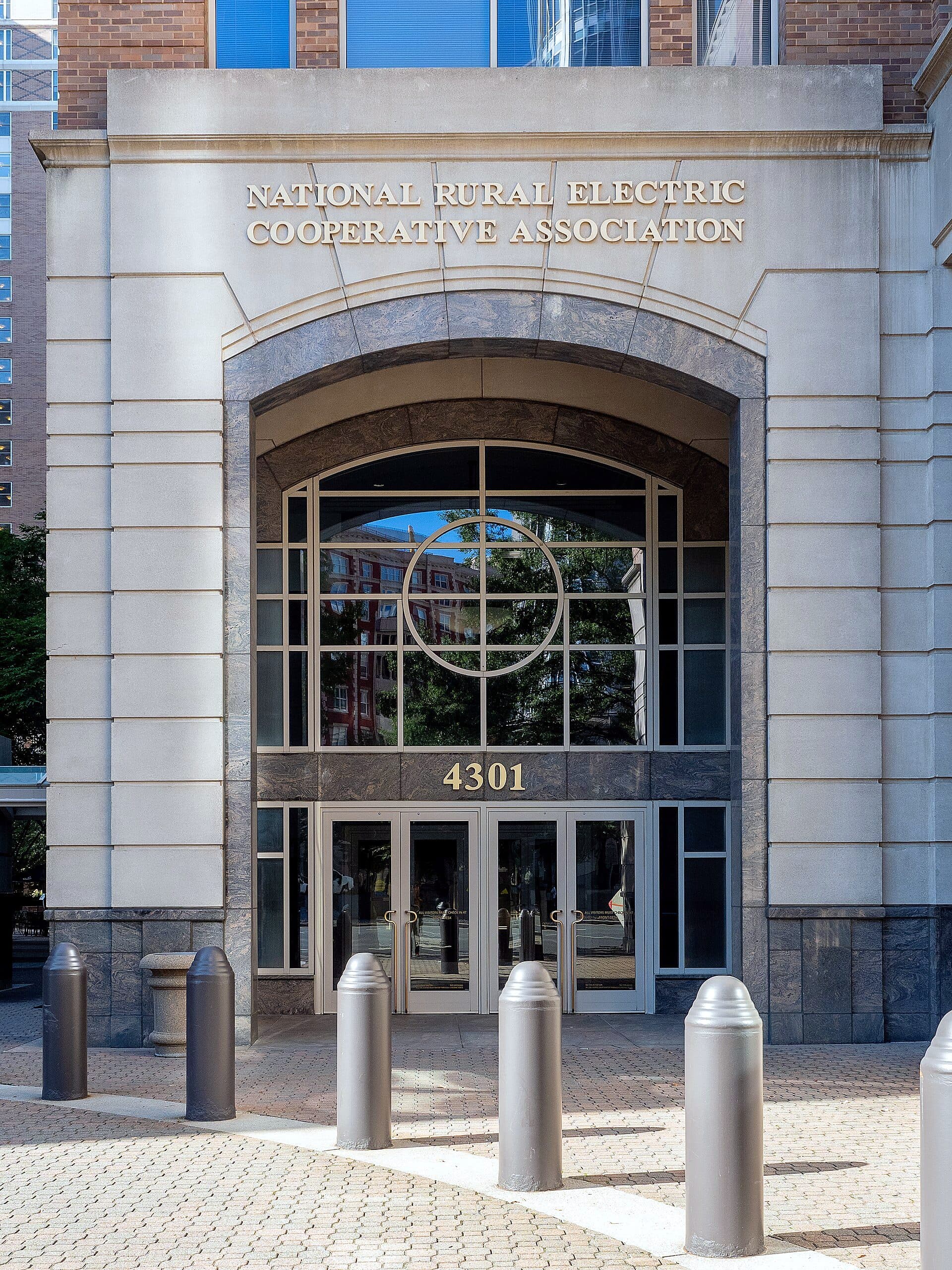
What is an Electric Cooperative?
An electric cooperative (also called an electric co-op or rural electric cooperative) is a cooperative utility that is owned by the consumers it serves. Every household or business that receives power from an electric co-op is a member-owner, with an equal vote in how the organization is governed and a share of any surplus revenue it generates.
Electric cooperatives operate on a not-for-profit basis. They do not exist to generate returns for outside investors. Instead, they exist to deliver reliable electricity to their members at the lowest feasible cost. Any revenue collected above operating expenses is returned to members as capital credits — the cooperative equivalent of dividends.
In the United States, electric cooperatives are the dominant model for rural electrification. They serve approximately 42 million Americans — roughly 1 in 8 people — across 56% of the nation's landmass. They maintain 2.6 million miles of power lines, or about 42% of the nation's total distribution lines, yet account for roughly 12% of total electricity sales. That ratio — vast territory, modest sales volume — defines the economic challenge electric co-ops were built to solve: delivering power to areas where commercial utilities saw no profit.
Electric co-ops are one of the most widespread types of cooperatives in the world, and the largest category of utility cooperative in the United States. Their structure is grounded in the same cooperative principles that govern credit unions, food co-ops, and agricultural cooperatives — democratic control, voluntary membership, and concern for community.
History: The Rural Electrification Act and the Birth of Electric Co-ops
The Problem: Darkness Across Rural America
By the early 1930s, electricity had transformed life in American cities. Factories, streetlights, radios, and refrigerators were commonplace in urban areas. But across rural America, fewer than 11% of farms had electric power. Private utility companies — known as investor-owned utilities (IOUs) — had little incentive to extend power lines into sparsely populated areas. The cost of stringing wire across miles of farmland to serve a handful of customers could not be justified by the revenue those customers would generate.
The result was a stark divide. City dwellers enjoyed modern conveniences while rural families relied on kerosene lamps, hand pumps, and wood stoves. The economic gap between urban and rural America widened with every year that electrification bypassed the countryside.
FDR and the Rural Electrification Administration
In 1935, President Franklin D. Roosevelt signed Executive Order 7037, creating the Rural Electrification Administration (REA) as part of the New Deal. The following year, Congress passed the Rural Electrification Act of 1936, giving the REA authority to make low-interest loans to organizations willing to bring power to unserved rural areas.
Private utilities were offered these loans first. Most declined. The economics had not changed — rural customers were too spread out, too few, and too poor to justify the capital expenditure. So rural communities organized themselves. Farmers, ranchers, and small-town residents formed cooperatives, pooled their resources, applied for REA loans, and built their own power lines.
The model was straightforward: community members signed up as charter members, pledged to buy electricity, and contributed labor and right-of-way access. The REA provided financing. The cooperative owned the infrastructure and operated it on behalf of its members.
Rapid Expansion
The impact was dramatic. By 1939, the percentage of electrified farms had risen from 11% to 25%. By 1953, over 90% of American farms had electricity. By the late 1960s, rural electrification was essentially complete.
This transformation is widely regarded as one of the most successful cooperative movements in history. Where private enterprise saw no opportunity, cooperatives built the infrastructure that brought rural America into the modern age. For a detailed look at investor-owned utilities vs electric cooperatives, see electric cooperative vs investor-owned utility.
The REA was later reorganized into the Rural Utilities Service (RUS), which continues to provide financing for rural electric, water, and telecommunications infrastructure under the USDA Rural Development. The same federal model that electrified the countryside also wired its phone lines through member-owned telephone and broadband cooperatives, after the Rural Electrification Act was amended in 1949 to cover rural telephone service.
How Electric Cooperatives Work
Electric cooperatives follow the same foundational structure as other cooperatives, adapted for the specific requirements of utility service delivery.
Member-Ownership
Every person or entity that receives electricity from the co-op is automatically a member-owner. Membership typically requires a modest connection fee (often $5 to $50), which serves as the member's initial equity contribution. There are no shares to buy and no outside investors. Ownership is tied to service — if you receive power from the co-op, you are an owner.
Democratic Governance
Electric cooperatives are governed by a board of directors elected by the membership, following the one-member, one-vote principle. Board elections are held at annual meetings, which also serve as forums for members to review the co-op's financial performance, ask questions, and vote on major policy decisions.
Directors are typically unpaid or receive modest stipends. They are members themselves — farmers, teachers, small business owners — not professional utility executives. This governance model keeps decision-making rooted in the community the co-op serves.
At-Cost Pricing
Unlike investor-owned utilities, which set rates to generate a return on equity for shareholders, electric cooperatives set rates to cover costs. Revenue must pay for purchased power, line maintenance, employee salaries, debt service, and reserves. Any revenue collected above these costs is considered a surplus, not a profit.
Rates at electric co-ops are not always lower than those charged by investor-owned utilities. Because co-ops serve low-density areas with long distribution lines and fewer customers per mile, the per-customer cost of infrastructure is often higher. What co-op rates lack is the profit margin — there is no return-on-equity component built into the price of power.
Capital Credits
When a cooperative collects more revenue than it needs to operate, the surplus is allocated to members as capital credits (also called patronage capital). Each member receives an allocation proportional to the amount of electricity they purchased during that year.
Capital credits are not paid out immediately. They remain in the cooperative's accounts as working capital, reducing the need to borrow money. Over time, the co-op's board of directors retires (pays out) the oldest capital credits when the cooperative's financial position allows it. A member who has been with the co-op for 20 years might receive a check representing their allocated surplus from 15 or 20 years ago.
This mechanism is the cooperative alternative to shareholder dividends. The money belongs to the members from the moment it is allocated — the co-op simply holds it as internal financing until it can be returned.
Types of Electric Cooperatives
Electric cooperatives in the United States operate at three distinct levels, each serving a different function in the power supply chain.
Distribution Cooperatives
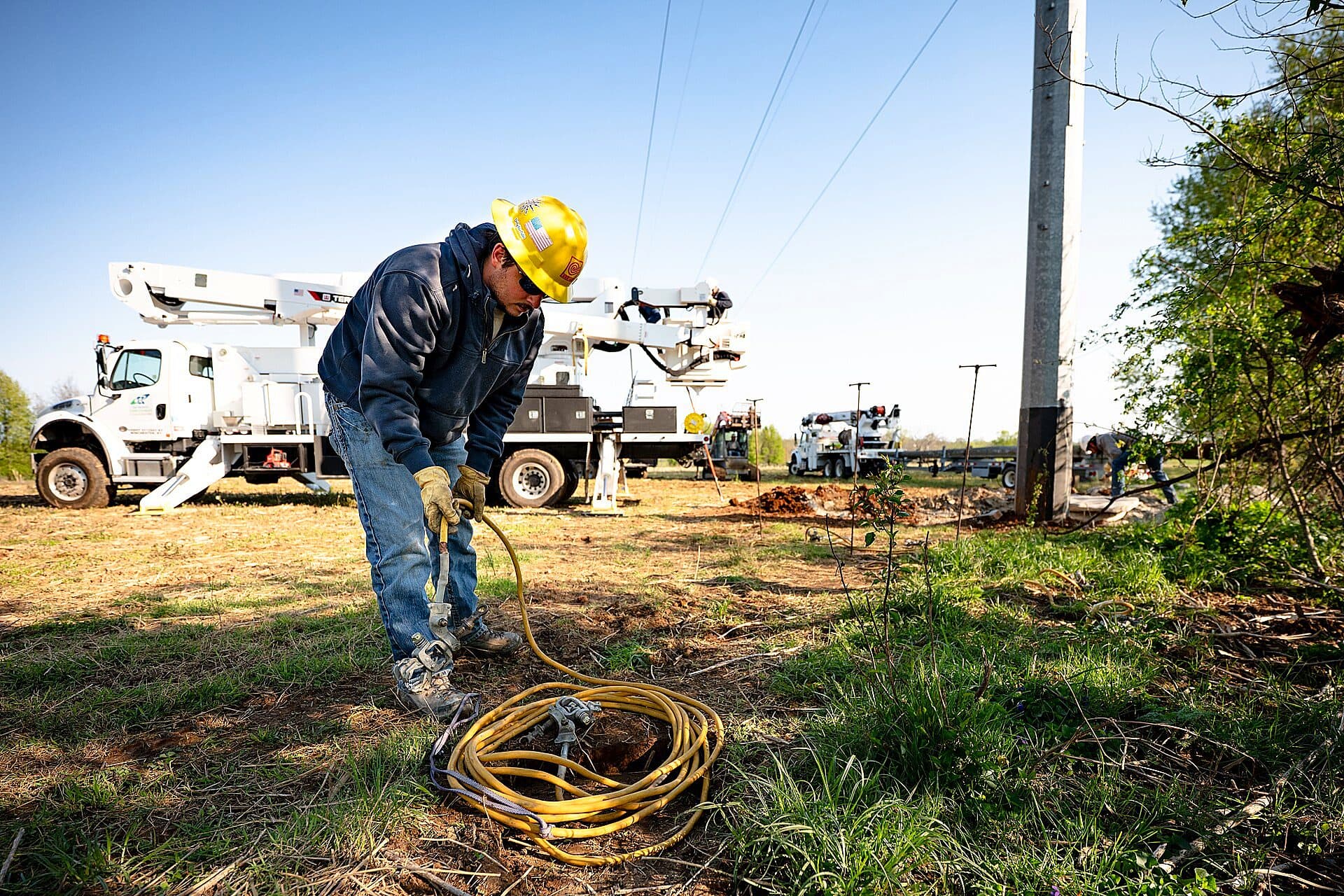
Distribution cooperatives are the most numerous and the most visible. These are the co-ops that deliver electricity directly to homes, farms, and businesses. They own and maintain the local distribution lines — the poles and wires that connect the broader power grid to individual meters.
There are 832 distribution cooperatives in the United States, organized under the umbrella of the National Rural Electric Cooperative Association (NRECA). They range from small operations serving a few thousand meters in a single county to large systems like Pedernales Electric Cooperative in Texas, the largest distribution co-op in the country with over 400,000 active meters across a 24-county service territory in the Texas Hill Country.
Other notable distribution co-ops include Rappahannock Electric Cooperative in Virginia (serving over 175,000 connections across 22 counties) and Jackson Electric Membership Corporation in Georgia.
Generation and Transmission Cooperatives (G&Ts)
Generation and transmission cooperatives are wholesale power suppliers. They own or contract for power generation capacity — coal plants, natural gas turbines, wind farms, solar installations — and transmit that power over high-voltage lines to their member distribution cooperatives.
There are 63 G&T cooperatives in the United States. They are cooperatives of cooperatives: their members are the distribution co-ops they supply, not individual consumers. See generation and transmission cooperatives for a full profile of this wholesale tier. Each distribution co-op that belongs to a G&T has a vote in its governance.
Major G&T cooperatives include:
- Basin Electric Power Cooperative (Bismarck, North Dakota) — serves 141 member systems across 9 states, with a generation portfolio exceeding 6,000 megawatts
- Tri-State Generation and Transmission Association (Westminster, Colorado) — supplies power to 42 member cooperatives across Colorado, Nebraska, New Mexico, and Wyoming
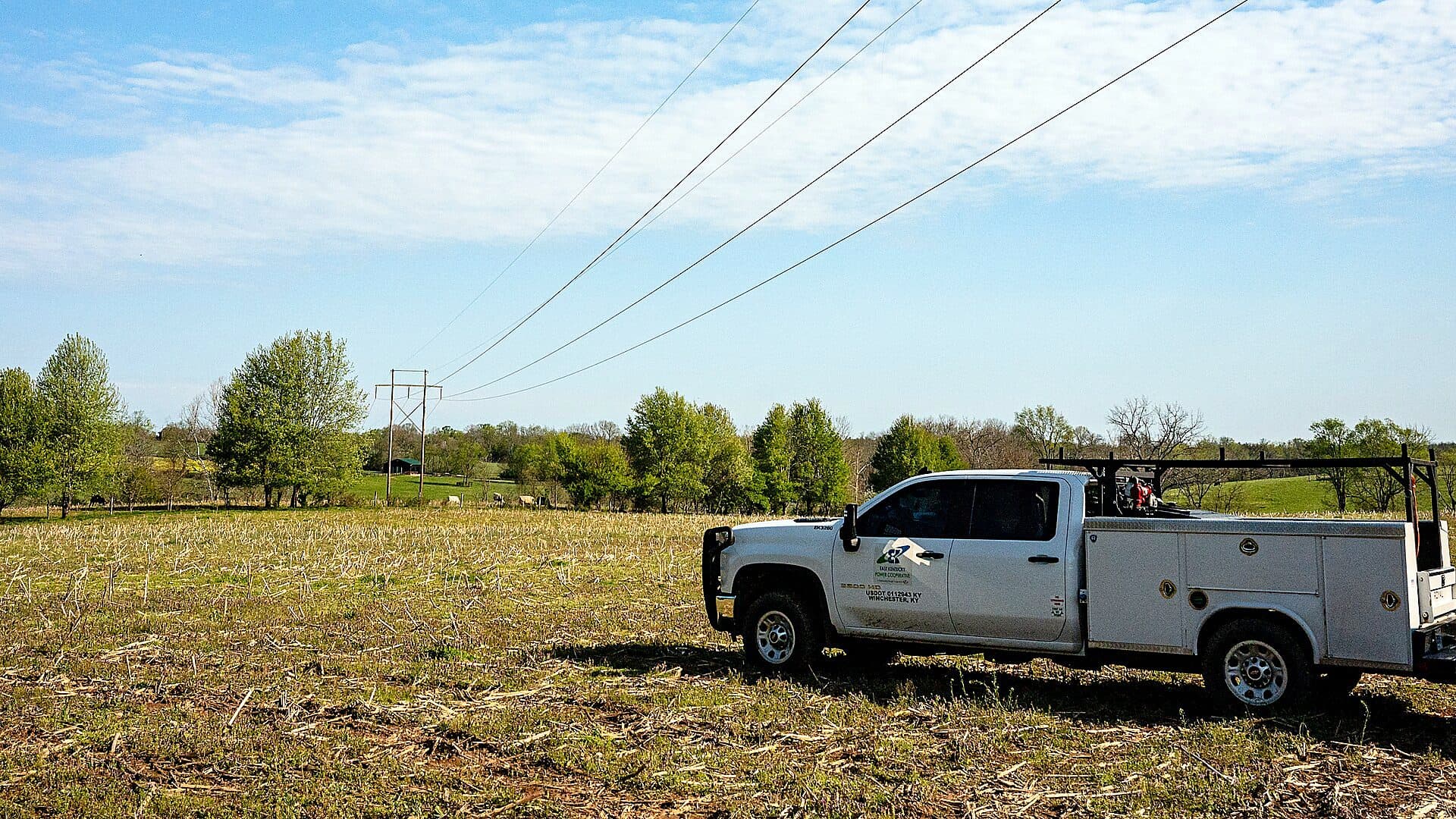
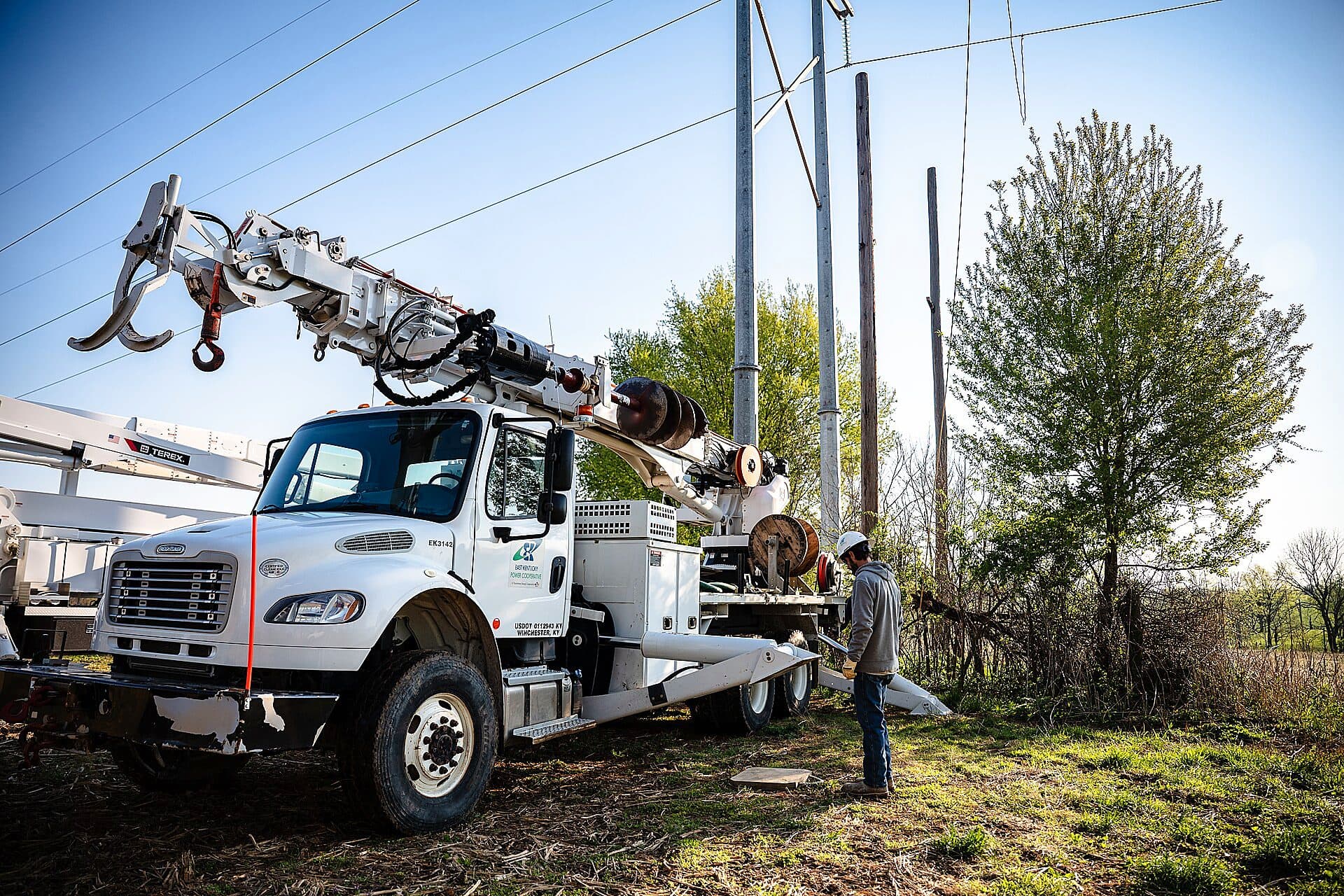
- East Kentucky Power Cooperative (Winchester, Kentucky) — serves 16 member cooperatives and roughly 1 million Kentuckians
- Oglethorpe Power Corporation (Tucker, Georgia) — wholesale power supplier to 38 member cooperatives in Georgia
Statewide and Regional Associations
Most states with significant cooperative presence have a statewide association that provides services to member co-ops, including government affairs, safety training, communications support, and group purchasing. These associations are themselves organized cooperatively.
At the national level, the NRECA serves as the trade association and advocacy organization for America's electric cooperatives. Founded in 1942, NRECA represents the interests of its member co-ops before Congress, federal agencies, and in national policy debates.
Electric Cooperatives vs. Investor-Owned Utilities
The American electric power sector is served by three types of providers: investor-owned utilities (IOUs), electric cooperatives, and municipal utilities (government-owned). The distinction between co-ops and IOUs is fundamental.
| Feature | Electric Cooperative | Investor-Owned Utility |
|---|---|---|
| Ownership | Member-consumers | Shareholders (investors) |
| Purpose | Deliver power at cost | Generate return for shareholders |
| Governance | One member, one vote | Votes proportional to shares |
| Rate setting | Cover costs + reserves | Cost recovery + profit margin |
| Surplus/profit | Returned to members as capital credits | Distributed to shareholders as dividends |
| Service territory | Primarily rural and suburban | Primarily urban and suburban |
| Regulation | Self-regulated by member-elected board (some state oversight) | Regulated by state public utility commission |
| Tax status | Tax-exempt under IRC Section 501(c)(12) (if 85%+ of income from members) | Taxable corporations |
| Customer density | ~8 consumers per mile of line | ~34 consumers per mile of line |
| Territory coverage | 56% of US landmass | ~40% of US landmass |
The customer density difference is the single most important economic factor. Investor-owned utilities serve roughly 34 customers per mile of distribution line. Electric cooperatives average roughly 8 customers per mile. This means cooperatives must build and maintain more infrastructure per customer, which drives higher per-unit costs even without a profit margin.
Despite this structural disadvantage, cooperative rates are competitive. According to NRECA data, the average residential rate charged by electric cooperatives is within a few cents per kilowatt-hour of the national average, and in some regions co-op rates are lower than those of neighboring IOUs.
Economics of Electric Cooperatives
Revenue and Rate Setting
Electric cooperative rates are set by the co-op's board of directors, not by a state regulatory commission (though some states do exercise oversight over cooperative rates). The board must balance three objectives: keeping rates affordable for members, maintaining reliable infrastructure, and building sufficient reserves to weather financial disruptions.
Most distribution cooperatives purchase their power wholesale from a G&T cooperative or from the open market. Purchased power typically represents 60-70% of a distribution co-op's total costs. The remainder covers distribution infrastructure, labor, debt service, and administration.
Capital Credits and Patronage Capital
The capital credits system is central to cooperative economics. When a co-op allocates surplus revenue to members, those funds become patronage capital — equity that belongs to the members but is retained by the cooperative for use as working capital.
Over time, a well-managed cooperative accumulates a substantial equity base funded entirely by its members' patronage capital. This reduces the need for external borrowing and strengthens the co-op's balance sheet. When the board determines that the cooperative's financial position is strong enough, it retires the oldest year's capital credits by issuing payments to the members (or their estates) who generated that surplus.
The retirement cycle varies. Some cooperatives retire credits on a 15-year rotation; others stretch to 25 years or more. The timing depends on the co-op's capital needs, debt obligations, and growth trajectory.
Financing and the CFC
The National Rural Utilities Cooperative Finance Corporation (CFC), established in 1969, provides financing to electric cooperatives independently of the federal government. The NCBA CLUSA also advocates for policy conditions that support cooperative utility financing. CFC is itself a cooperative — owned by the electric co-ops it lends to. It issues bonds on capital markets and channels the proceeds to member cooperatives as loans for infrastructure projects, system upgrades, and refinancing.
The Federal Financing Bank and the Rural Utilities Service continue to provide supplemental lending, particularly for cooperatives in economically distressed areas.
Renewable Energy Transition
Electric cooperatives are in the midst of a significant shift toward renewable energy, driven by falling costs, member demand, and federal incentives.
Solar and Wind Adoption
Many G&T cooperatives have invested heavily in wind and solar generation over the past decade. Basin Electric Power Cooperative operates wind farms across the northern Great Plains. Tri-State Generation and Transmission has committed to reducing greenhouse gas emissions by 80% by 2030 from 2005 levels and has added solar and wind capacity across its four-state territory.
At the distribution level, cooperatives have launched community solar programs that allow members to subscribe to a share of a local solar installation without putting panels on their own rooftops. This model is well-suited to cooperatives because the shared ownership structure aligns naturally with the cooperative principle of member economic participation.
The Inflation Reduction Act
The Inflation Reduction Act of 2022 (IRA) was a turning point for cooperative renewable investment. Because electric cooperatives are tax-exempt, they had historically been unable to benefit from federal tax credits for renewable energy — credits structured as deductions from taxable income, which co-ops do not have.
The IRA introduced direct-pay provisions that allow tax-exempt entities, including electric cooperatives, to receive the value of clean energy tax credits as direct cash payments. This unlocked billions of dollars in potential investment. NRECA estimated that cooperatives could access over $11 billion in clean energy tax credits through the IRA's provisions.
Distributed Energy and Grid Modernization
Cooperatives are also investing in grid modernization — smart meters, automated switching, battery storage, and distributed energy management systems. These technologies help cooperatives manage the intermittency of renewable generation, reduce outage times, and give members more visibility into their energy consumption.
The challenge is capital. Upgrading infrastructure across millions of miles of rural distribution lines requires sustained investment. Cooperatives must balance the cost of modernization against the imperative to keep rates affordable for members who often have lower median incomes than urban customers.
Major Electric Cooperatives
Several electric cooperatives stand out for their scale, innovation, or historical significance:
Pedernales Electric Cooperative (Johnson City, Texas) — The largest distribution cooperative in the United States, serving over 400,000 meters across 24 counties in central Texas. Founded in 1938 with strong support from then-Congressman Lyndon B. Johnson, who used his political influence to secure REA funding for the Texas Hill Country. PEC's service territory today includes the rapidly growing Austin metro area.
Basin Electric Power Cooperative (Bismarck, North Dakota) — One of the largest G&T cooperatives, supplying wholesale power to 141 member systems across nine states. Basin Electric operates a diversified generation portfolio including coal, natural gas, wind, and a synthetic natural gas plant. It serves approximately 3 million consumers through its member distribution cooperatives.
Tri-State Generation and Transmission Association (Westminster, Colorado) — Supplies wholesale electricity to 42 member cooperatives in Colorado, Nebraska, New Mexico, and Wyoming. Tri-State has been at the center of debates over the renewable energy transition, with some member cooperatives seeking to generate their own solar power independently of the G&T's long-term supply contracts.
East Kentucky Power Cooperative (Winchester, Kentucky) — A G&T serving 16 member distribution cooperatives across 87 Kentucky counties, reaching roughly 1 million consumers. EKPC has transitioned significant portions of its generation fleet from coal to natural gas and solar.
Rappahannock Electric Cooperative (Fredericksburg, Virginia) — One of the largest distribution cooperatives in the eastern United States, serving more than 175,000 connections across 22 Virginia counties.
Challenges Facing Electric Cooperatives
Declining Rural Population Density
Many cooperative service territories face stagnant or declining populations as young people move to urban areas. Fewer members spread across the same fixed infrastructure means higher per-member costs. Some cooperatives have benefited from suburban expansion and exurban migration, particularly in Sun Belt states, but others — especially in the Great Plains and Appalachia — face persistent demographic headwinds.
Wholesale Power Costs and Long-Term Contracts
Distribution cooperatives that purchase power from G&T cooperatives are often bound by long-term, all-requirements contracts — agreements to buy all of their electricity from the G&T for 30 to 50 years. These contracts provided stability during the era of large centralized power plants, but they can become constraints when a distribution co-op wants to pursue cheaper renewable options or generate its own power locally.
The tension between G&Ts and their member co-ops over contract flexibility has been one of the defining issues in the cooperative electric sector in recent years. Tri-State Generation's renegotiation of contract terms with member cooperatives seeking partial self-supply is a prominent example.
Broadband Expansion
Many electric cooperatives have entered the broadband internet business, leveraging their existing infrastructure (poles, rights-of-way, member relationships) to deliver fiber-optic service to unserved rural communities. This mirrors the mission of rural cooperatives more broadly — bringing essential services to underserved areas. This mirrors the original rural electrification mission — bringing essential infrastructure to areas that commercial providers have bypassed.
While broadband represents a growth opportunity and a genuine community service, it also requires significant capital investment and operational expertise in a sector most cooperatives have not historically served.
Governance and Member Engagement
Annual meeting attendance at many cooperatives is low, sometimes below 5% of the membership. Low engagement can lead to governance concerns — boards that are not meaningfully accountable to a disengaged membership. Cooperatives have experimented with online voting, drive-through meetings, and mail-in ballots to improve participation, with mixed results.
Maintaining the democratic character of the cooperative model requires ongoing investment in member education and communication — a principle recognized in the cooperative principles as the Fifth Principle: Education, Training, and Information.
Electric Cooperatives Around the World
While the United States has the most developed electric cooperative sector, the model exists globally. Bangladesh has over 80 rural electric cooperatives (called Palli Bidyut Samities) modeled directly on the American REA approach, serving over 30 million people. The Philippines has 121 electric cooperatives that provide power to most rural areas of the country. In Latin America, particularly in Bolivia, Argentina, and Costa Rica, electric cooperatives serve significant portions of the population.
The cooperative model works wherever the core conditions exist: commercial utilities unwilling to serve an area, communities willing to organize, and financing available for infrastructure. The pattern is remarkably consistent across continents and decades — communities building the infrastructure that markets will not.
Relationship to Other Cooperative Models
Electric cooperatives share structural DNA with other cooperative sectors. They are a form of consumer cooperative, since the members are the consumers of the service. They emerged alongside agricultural cooperatives — many early electric co-op organizers were the same farmers who had already built grain elevators and dairy cooperatives. And they demonstrate both the advantages and disadvantages of the cooperative model: democratic accountability and at-cost service on one hand, capital constraints and governance challenges on the other.
The electric cooperative sector is a powerful proof of concept for the cooperative model at scale. With 900+ cooperatives, $100+ billion in assets, and 42 million consumers, it demonstrates that member-owned organizations can manage complex, capital-intensive infrastructure over generational timeframes.
Frequently Asked Questions
How many electric cooperatives are there in the United States?
There are 832 distribution cooperatives and 63 generation and transmission cooperatives in the United States, as reported by the National Rural Electric Cooperative Association (NRECA). Together, they serve approximately 42 million people across 2.6 million miles of power lines.
Are electric cooperative rates lower than regular utility rates?
Not always. Electric cooperatives serve low-density rural areas, which means higher infrastructure costs per customer. However, co-op rates do not include a profit margin for shareholders, and any surplus is returned to members as capital credits. In many areas, cooperative rates are competitive with or lower than those of neighboring investor-owned utilities.
What are capital credits?
Capital credits (also called patronage capital) are surplus revenues allocated to members in proportion to their electricity purchases. The cooperative retains these funds as working capital and returns them to members over time — typically on a 15- to 25-year cycle. Capital credits represent each member's equity stake in the cooperative.
Who can join an electric cooperative?
Membership is open to anyone who receives electric service within the cooperative's designated territory. There is no application process beyond establishing service. Members typically pay a one-time connection fee. This reflects the First Cooperative Principle of voluntary and open membership.
How are electric cooperatives governed?
Each electric cooperative is governed by a board of directors elected by the membership on a one-member, one-vote basis. Board elections occur at annual meetings. Members can also vote on bylaws, merger proposals, and other significant decisions. Day-to-day operations are managed by a professional general manager hired by the board.
Explore Further
- What are Cooperatives? — foundational overview of the cooperative model
- Types of Cooperatives — the full taxonomy including utility, consumer, worker, and agricultural cooperatives
- Cooperative Principles — the seven principles that govern all cooperatives
- History of Cooperatives — from the Rochdale Pioneers to rural electrification and beyond
- Advantages and Disadvantages of Cooperatives — an honest assessment of the cooperative model's strengths and limitations
- Agricultural Cooperatives — the sector that grew alongside electric co-ops in rural America
- Consumer Cooperatives — the broader category that includes electric cooperatives
- Cooperative Laws — legal and regulatory frameworks for utility cooperatives
- Browse the cooperative directory — find electric cooperatives by state
References & further reading
This guide is researched against primary sources. Where we cite figures, they reflect the most recent data published by these organisations at the time of writing.
- 1.Cooperative Services — USDA Rural Development
- 2.The 7 Cooperative Principles — NCBA CLUSA
Find Cooperatives Worldwide
Browse 26,000+ cooperatives by sector and country in our free directory.