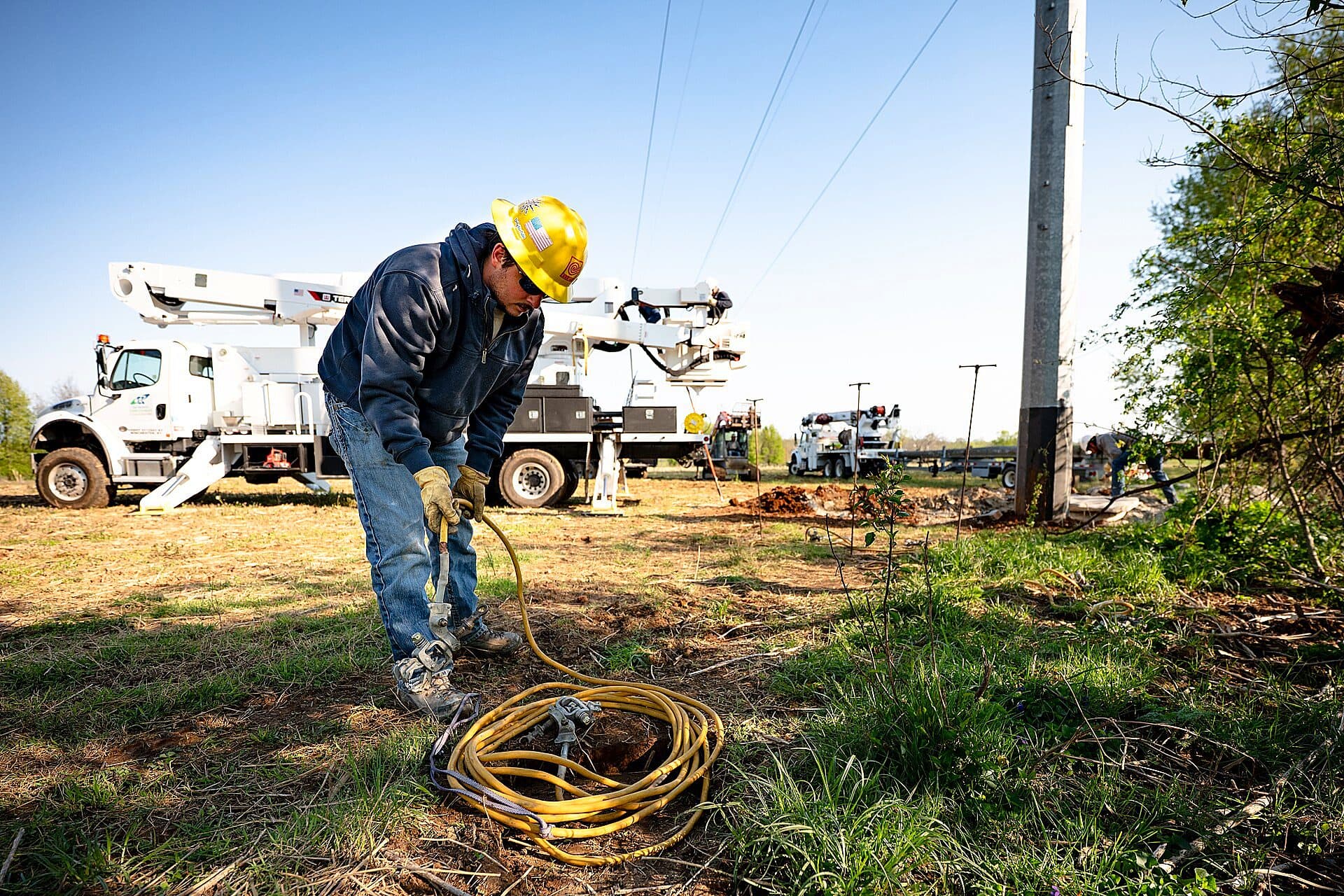
An energy cooperative is a member-owned organisation that generates, distributes, or purchases electricity on behalf of its members — from traditional rural electric utilities to community solar arrays and offshore wind farms. The model spans more than a century and two distinct waves: the rural electrification movement of the 1930s–1960s, and the renewable energy movement that accelerated in Europe after 2000 and is now growing worldwide.
Two Waves of Energy Cooperatives
| Wave | Period | Driver | Examples |
|---|---|---|---|
| Rural electrification | 1930s–1960s | Market failure — utilities refused to serve rural areas | NRECA, 832 US electric coops |
| Renewable energy | 2000–present | Community ownership of clean energy + policy support | REScoop.eu, Energiegenossenschaften, Danish wind coops |
The economic logic behind both waves is identical: commercial energy companies will not invest where returns are insufficient. Rural areas were unprofitable to electrify; small-scale renewable projects are unprofitable for large utilities. In both cases, communities organised cooperatively to fill the gap. This pattern is central to the broader story of the cooperative movement and its role in addressing market failures.
Traditional Electric Cooperatives — The NRECA Model
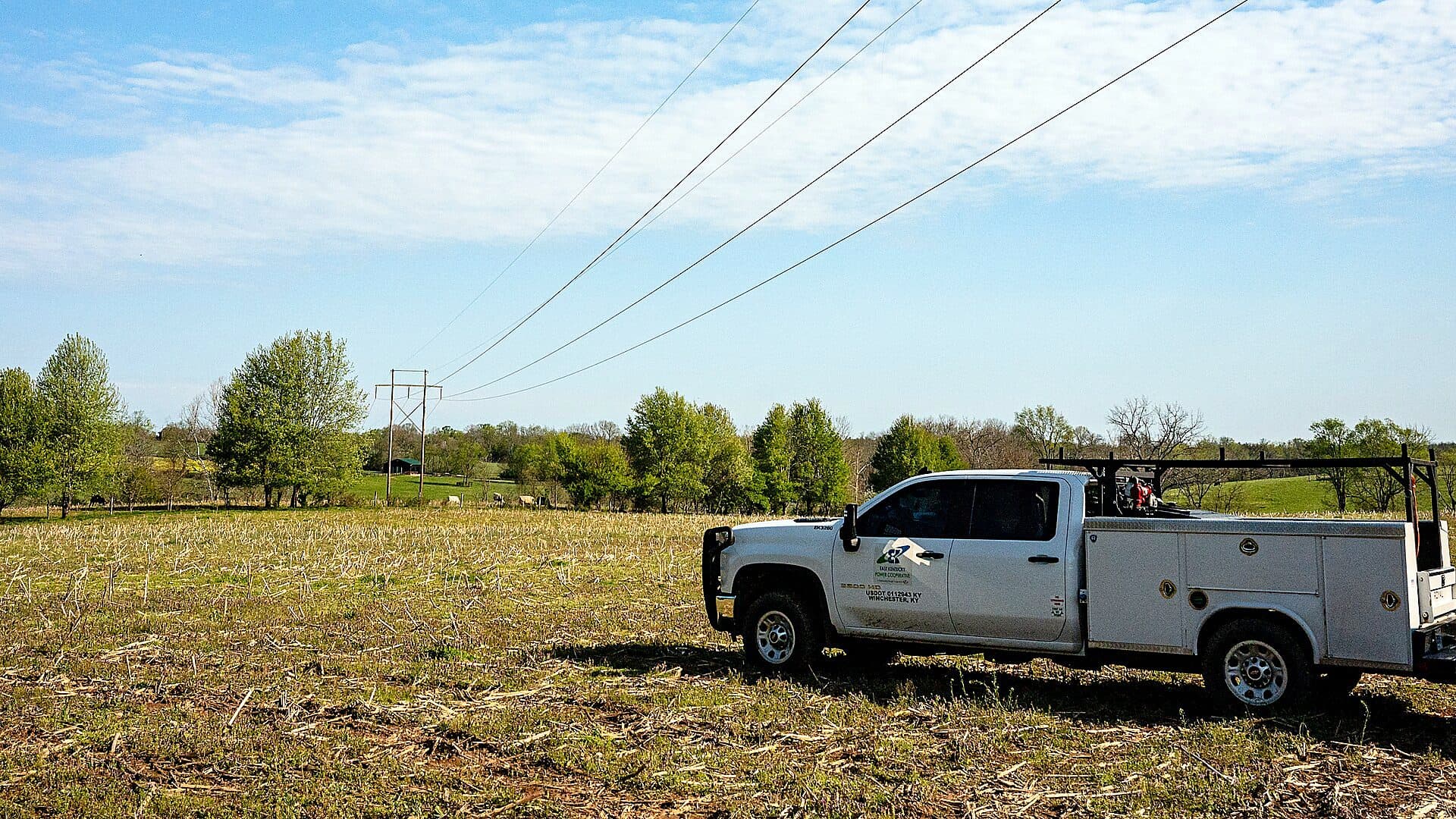
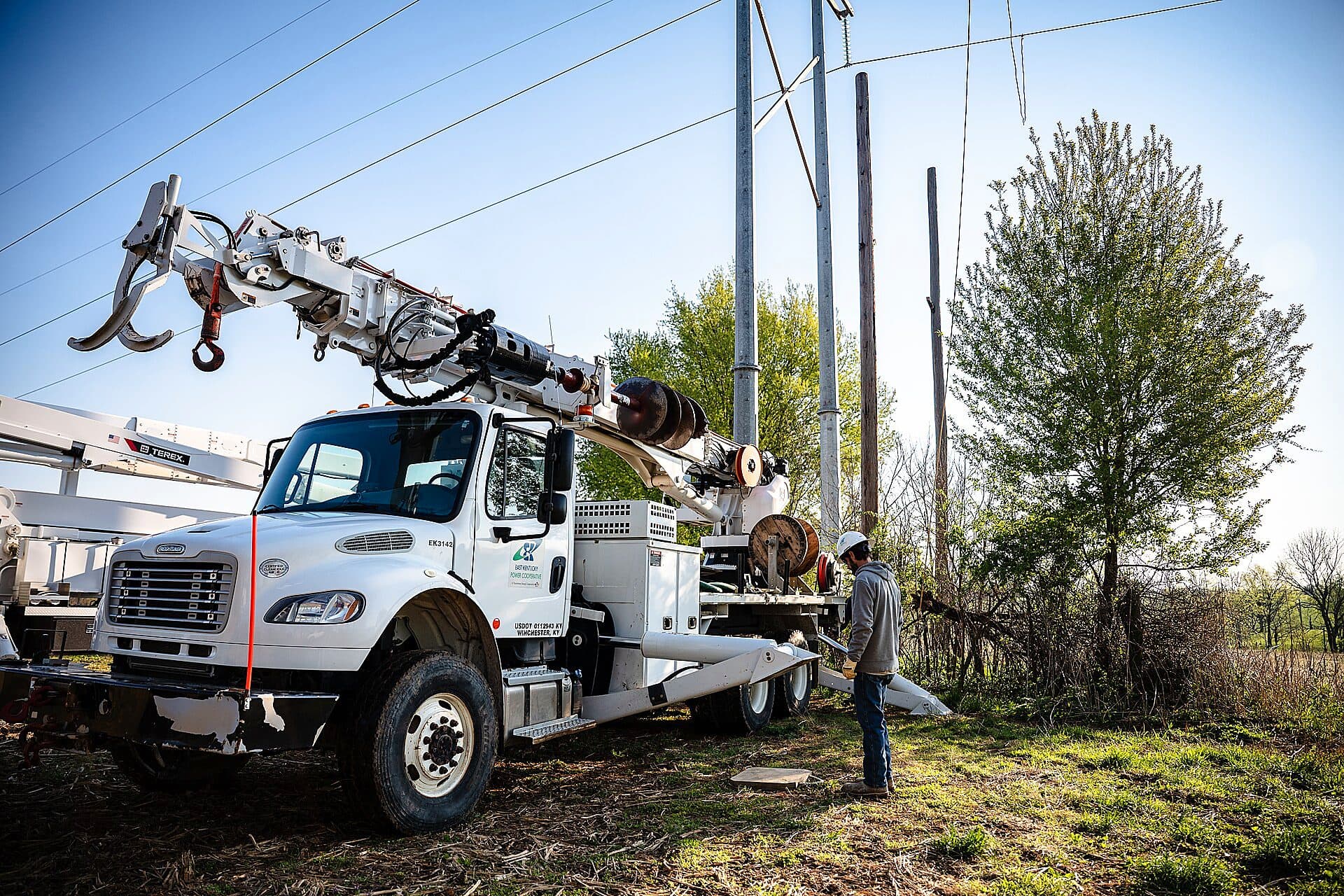
The United States built the largest rural electric cooperative network in the world through the Rural Electrification Administration (REA), established by the Rural Electrification Act of 1936. The federal government provided low-interest loans; farmers provided labour and land; together they formed member-owned cooperatives to bring electricity to areas that commercial utilities wouldn't touch.
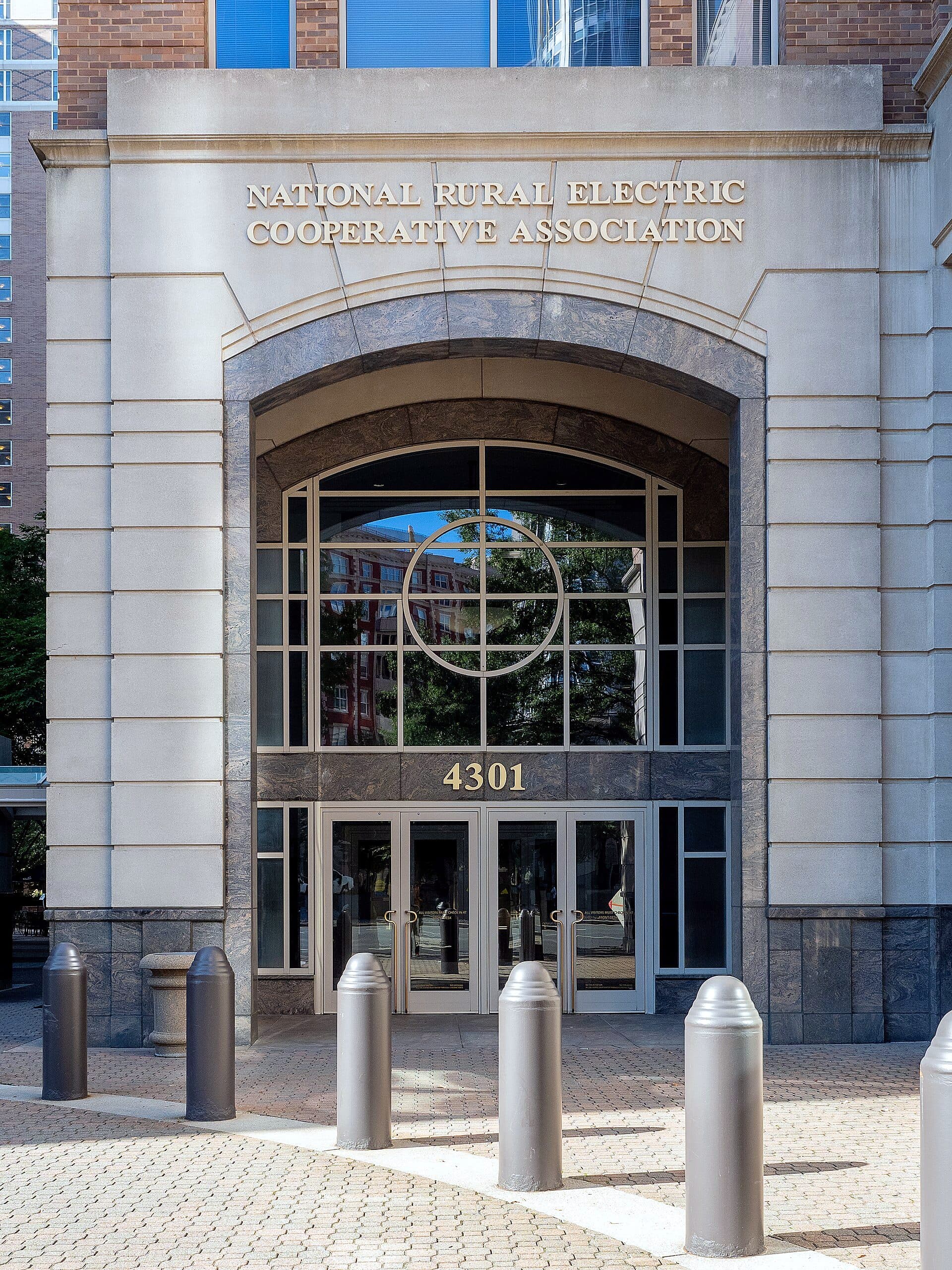
The National Rural Electric Cooperative Association (NRECA) now represents 832 distribution cooperatives serving 42 million member-owners across 48 states. These cooperatives cover 56% of the US landmass and generate over $15 billion in annual revenue.
Structure of the US Electric Cooperative Network
The network operates in two tiers:
Distribution cooperatives own and operate the local lines that deliver electricity to homes, farms, and businesses. Members elect local boards. Examples:
- Pedernales Electric Cooperative (Texas) — one of the largest in the US, 390,000+ members, 8,100 miles of line
- Central Electric Cooperative (Oregon) — serves high-desert communities in central Oregon
Generation and Transmission (G&T) cooperatives own power plants and transmission lines, selling wholesale electricity to distribution cooperatives. Examples:
- Tri-State Generation and Transmission (Colorado) — 44 member cooperatives across four states, 6,000+ miles of transmission line
- PowerSouth Energy Cooperative (Alabama) — 20 distribution cooperatives, 3,000+ MW generation capacity
Members of a distribution cooperative are indirectly members of the G&T cooperative — a nested cooperative structure that gives rural communities ownership over their entire electricity supply chain. See generation and transmission cooperatives for a detailed breakdown of how G&Ts operate.
Capital Credits — The Financial Mechanism
Electric cooperatives return surplus revenue to members as capital credits — retained equity that the cooperative holds on each member's behalf and periodically retires (pays out in cash). A member who paid electric bills from 1995 to 2025 has accumulated capital credits that the cooperative returns over time. This is not a rebate — it is an equity stake.
European Renewable Energy Cooperatives — REScoop
Europe has seen the fastest growth in renewable energy cooperatives since 2000, driven by feed-in tariff policies (particularly in Germany, Belgium, Denmark, and the Netherlands) that made community-scale wind and solar economically viable.
REScoop.eu is the European federation of renewable energy cooperatives. As of 2024, it represents over 1,500 energy cooperatives across 15 European countries with more than 1.5 million members. These cooperatives own solar panels, wind turbines, small hydro installations, and in some cases district heating networks.
Germany — Energiegenossenschaften
Germany leads Europe in energy cooperative density. Following the Energiewende (energy transition) policy launched in 2010, the number of German energy cooperatives grew from near zero to over 1,000 Energiegenossenschaften by 2020, representing an estimated €3 billion in total investment.
The German model typically works as follows:
- A group of residents form a cooperative (registered under the German Cooperative Law, GenG)
- Members buy shares (typically €500–€5,000 per share)
- The cooperative installs solar panels on local rooftops or builds a small wind farm
- Revenue from electricity sales (to members, to the grid, or both) is distributed as dividends
Notable German energy cooperatives:
- Bürgerenergie Berlin — urban solar and wind cooperative in Berlin, 900+ members
- EWS Schönau — Elektrizitätswerke Schönau, founded after Chernobyl by residents of Schönau, now a cooperative supplying 200,000 customers with renewable electricity across Germany
- Greenpeace Energy (now dissolved) — cooperative energy supplier that grew to 120,000 customers
Belgium and the Netherlands
Ecopower (Belgium) is one of Europe's oldest renewable energy cooperatives, founded in 1991. It owns wind turbines, solar installations, and small hydro plants, supplying green electricity to 70,000+ customers across Flanders.
Windcentrale (Netherlands) pioneered the "wind share" (windaandeel) model — individuals buy fractional ownership of specific wind turbines and receive electricity credits proportional to their share. Over 10,000 Dutch households have purchased wind shares.
Danish Wind Cooperatives — The Middelgrunden Example
Denmark invented community wind energy. By 1996, Danish citizens owned more than 80% of all wind turbines in Denmark through cooperative and family ownership structures — a result of deliberate policy requiring local participation in wind development.
Middelgrunden Offshore Wind Farm, completed in 2001 off the coast of Copenhagen, remains the world's most cited example of community wind ownership. The project is jointly owned:
- 50% by Copenhagen Energy (the municipal utility)
- 50% by the Middelgrunden Wind Turbine Cooperative — 8,500 member-owners who purchased shares
The cooperative's 20 turbines (40 MW total) supply approximately 3% of Copenhagen's electricity. Members receive annual dividends based on electricity production — in good wind years, returns have exceeded 6%.
Danish policy requiring new offshore wind farms to offer at least 20% local ownership to community organisations has since been weakened, but Middelgrunden remains the template for participatory wind development cited by policymakers across Europe and beyond.
Community Solar — The Cooperative Analogue
Community solar is a subscription model that allows households and businesses to receive credits from a shared solar array — without installing panels on their own roof. While many community solar projects are commercially operated, a growing number are structured as cooperatives or cooperative analogues.
How Community Solar Works
- A solar array is built (on a community building, farm, or dedicated solar site)
- Households subscribe to a portion of the array's output
- Credits appear on their utility bill, reducing what they owe the distribution cooperative or utility
- Members pay a subscription fee, typically slightly lower than grid rates
Community solar cooperatives combine the subscription model with member ownership. Instead of paying a subscription to a for-profit operator, members buy shares in a cooperative that owns the array.
Notable examples:
- Clean Energy Collective (Colorado) — early model for community solar, later acquired, but the cooperative model it proved is now widely replicated
- SunShare — operates in Colorado and Minnesota, working with several rural electric cooperatives
- Rhode Island Energy — the state mandates that 40% of community solar projects offer reduced-income subscriptions, a policy that has drawn cooperative developers into the market
Cooperative Electric Utilities Entering Solar
Many traditional rural electric cooperatives now own solar generation assets:
- Kit Carson Electric Cooperative (New Mexico) — 100% renewable by 2022 through solar PPAs and battery storage; one of the first US electric cooperatives to achieve this milestone
- Holy Cross Energy (Colorado) — 70%+ renewable, significant member solar programme
United Kingdom — Community Energy Cooperatives
The UK community energy sector grew rapidly between 2010 and 2020, driven by feed-in tariffs that made small-scale renewable generation financially viable. Community Energy England counted over 200 active community energy organisations as of 2023, many structured as cooperatives or Industrial and Provident Societies.
Key examples:
- Westmill Solar Cooperative (Oxfordshire) — one of the UK's largest community-owned solar farms, 23 acres, 4,900 panels, 1,650 member-shareholders. Members receive annual dividends; the surplus has also funded a community benefit fund that grants money to local environmental projects.
- Westmill Wind Farm Cooperative — five wind turbines adjacent to the solar farm, owned by 2,400 community shareholders. The two Westmill cooperatives together represent the model that UK community energy organisers cite most often.
- Plymouth Energy Community — urban energy cooperative, 1,000+ members, combines collective energy purchasing with solar installation on social housing.
- Energy4All — not a cooperative itself, but a company that has set up and manages 23 community energy cooperatives across the UK, ranging from small solar arrays on community buildings to larger wind farms.
The UK's feed-in tariff programme ended in 2019 and was replaced by the less favourable Smart Export Guarantee (SEG). New community energy development has slowed as a result, and existing cooperatives have focused on maintaining and optimising existing assets rather than building new ones.
Group Purchasing Cooperatives — Energy Buying Clubs
Not all energy cooperatives generate electricity — some simply buy it collectively, using member pooling to negotiate better rates than individuals could achieve alone.
Energy buying clubs (sometimes called group purchasing cooperatives) are common in the UK, Netherlands, and parts of the United States:
- iChoosr operates group energy switching campaigns in the UK and Netherlands, pooling thousands of households to negotiate competitive tariffs through reverse auction. While not technically a cooperative (iChoosr is a for-profit company that runs the auction), the participating households benefit from collective bargaining in the same way cooperative members do.
- Connecticut Green Energy Cooperative — pools purchasing power for community solar subscriptions
- Neighborhood Energy (Seattle) — group purchasing of solar installation, not electricity itself, using volume to reduce per-household installation costs
True energy purchasing cooperatives — where members own the entity doing the negotiating — are less common than group purchasing platforms, but several credit unions and consumer cooperatives have added group energy purchasing as a member benefit.
Energy Cooperatives in the Global South
The energy cooperative model is not limited to wealthy countries. Community energy cooperatives are growing in developing countries as solar technology costs have dropped and rural electrification remains incomplete.
Bangladesh has one of the world's most successful rural electrification programmes through Rural Electrification Board (REB) — which operates through a cooperative model. The REB had, as of 2022, distributed 6 million solar home systems through 80 Palli Bidyut Samiti (rural electricity cooperatives) serving 35 million people. The cooperative model allowed local governance and local maintenance — a key advantage over centralised utility provision in geographically dispersed areas.
India's solar cooperative movement is newer but growing, particularly in Gujarat and Rajasthan, where farmer-owned solar pump cooperatives allow smallholders to collectively own irrigation pumping systems. The surplus power (when fields don't need irrigation) is sold back to the grid, generating income for the cooperative.
Latin America has seen community energy cooperative growth in Colombia, Brazil, and Argentina, often funded through IDB (Inter-American Development Bank) and development finance institution support. Colombia's SSPD energy cooperative regulations provide a framework for rural energy cooperatives to operate as licensed utilities.
How to Join an Energy Cooperative
United States
If you live in a rural electric cooperative service area, you are likely already a member — you became one when you started paying for electricity. Check your electricity bill for your cooperative's name, then visit their website to confirm membership status and find out about:
- Capital credits — your accumulated equity
- Community solar programmes — many distribution cooperatives now offer community solar subscriptions
- Renewable energy programmes — green pricing or renewable energy certificate (REC) purchase options
If you want to invest in a community renewable energy cooperative, search the NRECA marketplace or your state energy office for community solar cooperatives in your area.
Europe
REScoop.eu maintains a directory of member cooperatives at rescoop.eu. Most European energy cooperatives accept new members by purchasing shares. Minimum share purchases range from €200 (some German Energiegenossenschaften) to €1,000–€5,000 (larger wind cooperatives). Annual general meetings allow members to vote on energy purchasing decisions, project development, and dividend policy.
Starting an Energy Cooperative
Forming a new energy cooperative typically requires:
- Identifying a specific project (rooftop solar, community wind, group purchasing)
- Meeting minimum membership requirements for your jurisdiction (15 in the Philippines, 3 in the UK, 10 in Kenya, varies by US state)
- Securing a power purchase agreement (PPA) or grid interconnection agreement if you will generate electricity
- Registering with the appropriate authority (see our registration guide)
USDA Rural Development's Rural Energy for America Programme (REAP) provides grants and loan guarantees to agricultural producers and rural small businesses — including cooperatives — for renewable energy system installation. See also grants for cooperatives and cooperative grants funding guide for broader funding options.
Energy Cooperative vs. Commercial Utility — Key Differences
| Feature | Energy Cooperative | Commercial Utility |
|---|---|---|
| Ownership | Member-owners | Shareholders |
| Profit distribution | Capital credits / dividends to members | Dividends to shareholders |
| Governance | One member, one vote | Proportional to share ownership |
| Primary goal | Affordable, reliable energy for members | Return on equity for investors |
| Rates set by | Elected board | State utility regulator |
| Surplus use | Returned to members or reinvested | Paid to shareholders |
Frequently Asked Questions
What is an energy cooperative? An energy cooperative is a member-owned organisation that generates, distributes, or purchases electricity on behalf of its members. The oldest and largest examples are rural electric distribution cooperatives — the 832 cooperatives in the NRECA network that serve 42 million Americans. The newest examples are community renewable energy cooperatives that collectively own solar arrays or wind turbines.
How is an energy cooperative different from a regular electric utility? A cooperative is owned by its customers. Surplus revenue is returned to members as capital credits or dividends rather than paid out to outside shareholders. Governance is democratic — members elect a board of directors. A commercial utility is owned by investors, governed by a board elected by shareholders, and regulated by a state public utilities commission. Both are subject to grid reliability requirements, but their financial incentives differ significantly.
How many energy cooperatives are there in Europe? REScoop.eu counted over 1,500 renewable energy cooperatives across Europe as of 2024, with more than 1.5 million members. Germany alone has over 1,000 Energiegenossenschaften. The Netherlands, Belgium, Denmark, and the UK have active community energy cooperative sectors. Most European energy cooperatives are relatively small — median membership is a few hundred; median assets are under €2 million.
Can an energy cooperative connect to the national grid? Yes. Grid interconnection is technically possible for cooperatives of any size, subject to network operator approval and compliance with technical standards. In Europe, feed-in tariffs and net metering regulations specifically accommodate community energy cooperatives. In the US, rural electric cooperatives are directly interconnected; community solar cooperatives typically work through a virtual net metering arrangement with the local distribution cooperative or investor-owned utility.
Are energy cooperatives profitable for members? Returns vary significantly. Traditional rural electric cooperatives aim to keep rates as low as possible rather than generate returns — the benefit is lower electricity costs, not dividends. Renewable energy cooperatives in Europe typically target annual returns of 2–6% on member shares, paid as dividends from electricity sales revenue. Danish wind cooperatives like Middelgrunden have paid returns above 6% in strong wind years. Returns depend on energy production (weather), electricity prices, and operating costs.
What is the difference between a community solar subscription and a solar cooperative? A community solar subscription is a contract — you pay a monthly fee to receive credits from a shared array, but you do not own a share of the underlying asset. A solar cooperative gives you ownership — you own shares in the cooperative that owns the array, receive dividends proportional to your investment, and vote on how the cooperative is governed. Subscriptions are more common because they require no minimum investment; cooperatives offer equity participation and democratic control.
What happened to the Schönau electricity cooperative? Elektrizitätswerke Schönau (EWS) is still operating. Founded in 1994 by residents of Schönau, Baden-Württemberg, who wanted a nuclear-free electricity supply after Chernobyl, EWS won a local referendum in 1996, bought out the local grid, and began supplying renewable electricity. It grew into a national supplier — EWS Schönau served over 200,000 customers across Germany by 2020. It is the most cited example of a citizen-founded energy cooperative achieving commercial scale.
See also:
References & further reading
This guide is researched against primary sources. Where we cite figures, they reflect the most recent data published by these organisations at the time of writing.
- 1.Cooperative Services — USDA Rural Development
- 2.Cooperative identity, values & principles — International Cooperative Alliance
Continue Reading
Find Cooperatives Worldwide
Browse 26,000+ cooperatives by sector and country in our free directory.